How to Catch Lobster in the Florida Keys
The Florida Keys are one of the most popular destinations in the world for recreational lobster diving. Every year, thousands of divers and snorkelers head to the Keys in search of Florida spiny lobster hiding beneath coral heads, ledges, bridges, and patch reefs.
Whether you’re participating in mini-season or the regular lobster season, understanding where lobster live and how to catch them legally can greatly improve your success.
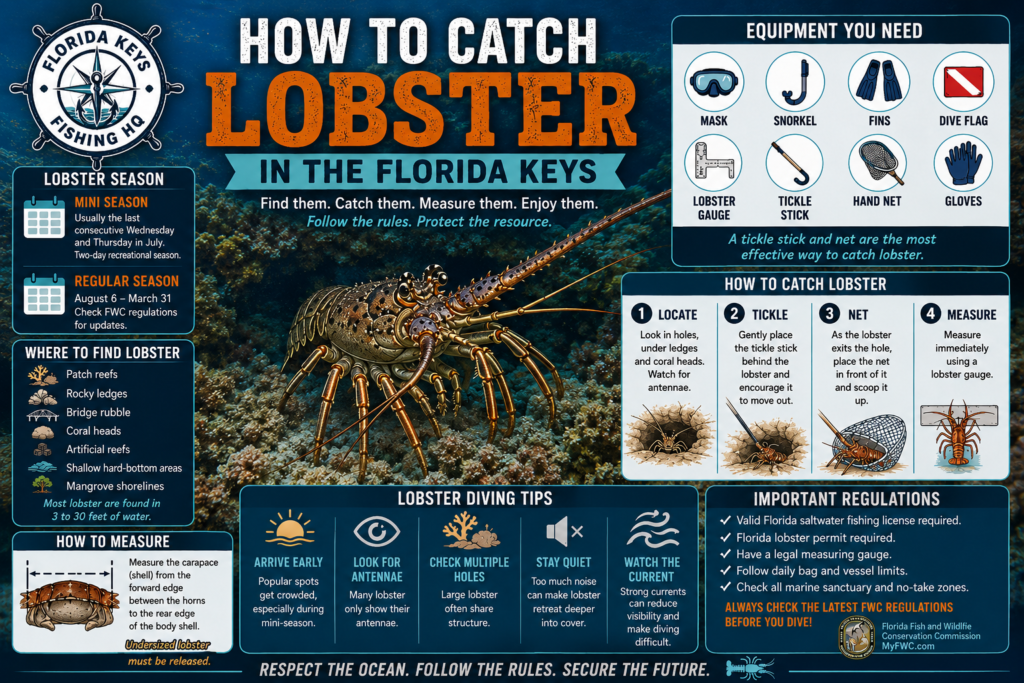
When Is Lobster Season in the Florida Keys?
Florida offers two lobster seasons:
Mini Season
The Florida Keys mini-season is a special two-day recreational season held each summer, usually during the last consecutive Wednesday and Thursday of July.
Mini-season allows recreational divers to harvest lobster before the regular season opens.
Regular Season
The regular lobster season runs from August 6 through March 31.
Always check current FWC regulations before your trip, as dates and regulations can change.
Where to Find Lobster
Spiny lobster prefer structure that provides protection during the day.
Common locations include:
- Patch reefs
- Rocky ledges
- Bridge rubble
- Coral heads
- Artificial reefs
- Shallow hard-bottom areas
- Mangrove shorelines
Most recreational lobster in the Florida Keys are found in water ranging from 3 to 30 feet deep.
During the day, lobster typically hide in holes and under ledges.
What Equipment Do You Need?
Basic lobster gear includes:
- Mask
- Snorkel
- Fins
- Dive flag
- Lobster gauge
- Tickle stick
- Hand net
- Gloves
- Measuring device
A tickle stick and net combination is one of the most effective methods for catching lobster.
How to Catch Lobster
Step 1: Locate the Lobster
Look underneath ledges, coral heads, and rocks.
Signs of lobster include:
- Long antennae sticking out of holes
- Multiple lobster stacked together
- Fresh tracks in the sand
Step 2: Use a Tickle Stick
Gently place the tickle stick behind the lobster.
Slowly encourage the lobster to move forward out of its hiding spot.
Step 3: Net the Lobster
As the lobster exits the hole, position the net in front of it.
Lobster naturally move backward, so guide it into the net and secure it.
Step 4: Measure Immediately
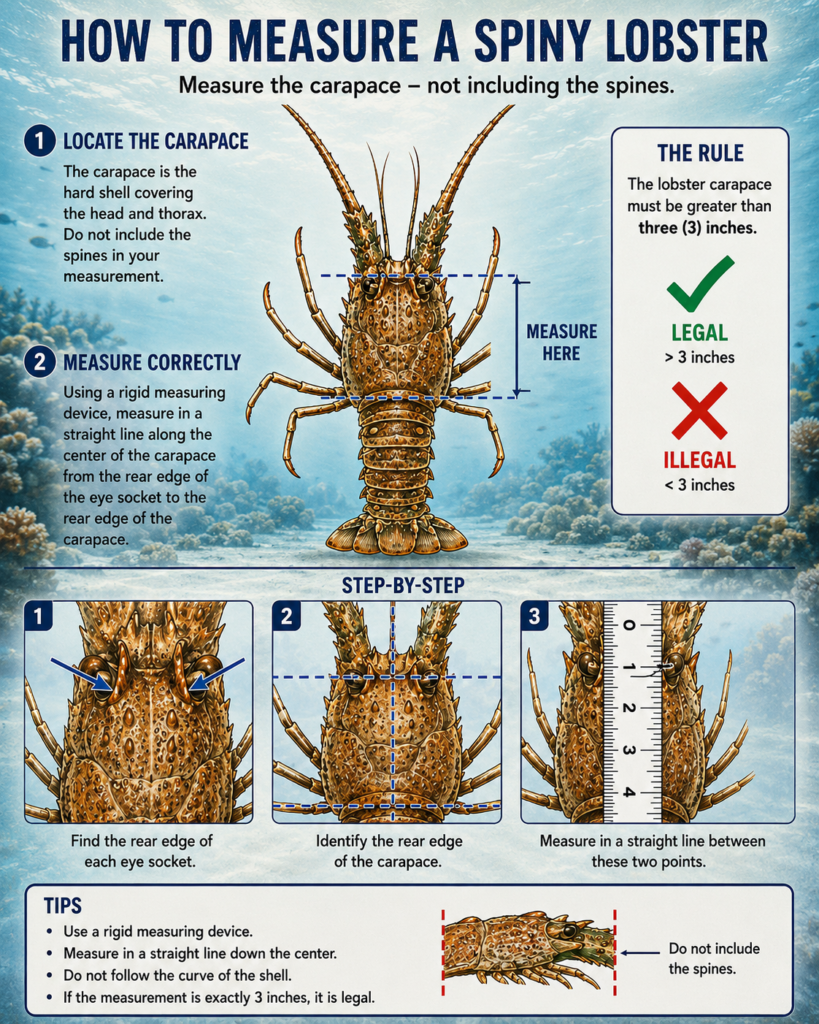
Every lobster must be measured before being placed in your catch bag.
Never assume a lobster is legal without measuring it.
How to Measure Spiny Lobster in Florida
Florida regulations require lobster to meet a minimum carapace length.
Measure from:
- The forward edge between the horns
- To the rear edge of the body shell
A lobster gauge is required while harvesting.
Undersized lobster must be released immediately.
Lobster Diving Tips
Arrive Early
Popular areas receive heavy pressure, especially during mini-season.
Look for Antennae
Many lobster remain completely hidden except for their antennae.
Check Multiple Holes
Large lobster often share structure with several smaller lobster.
Stay Quiet
Excessive splashing and noise can cause lobster to retreat deeper into cover.
Watch the Current
Strong currents can make diving difficult and reduce visibility.
Florida Keys Lobster Regulations
Regulations can change, but some important rules include:
- Possess a valid Florida saltwater fishing license if required.
- Possess a Florida lobster permit if required.
- Carry a legal measuring gauge.
- Follow daily bag limits.
- Follow vessel limits where applicable.
- Respect all marine sanctuary and no-take zones.
Always review the latest Florida Fish and Wildlife Conservation Commission (FWC) regulations before harvesting lobster.
Common Mistakes
Grabbing Before Measuring
Always measure first.
Ignoring Sanctuary Boundaries
Many protected areas in the Florida Keys prohibit lobster harvesting.
Diving Without a Flag
A dive flag is required and significantly improves safety.
Focusing Only on Reefs
Some of the best lobster habitat is found along shallow ledges and hard-bottom areas.
Related Florida Keys Spearfishing Guides
- Best Florida Keys Spearfishing Areas
- Where Can You Spearfish in the Florida Keys?
- Florida Keys No-Take Zones
Final Thoughts
Catching lobster in the Florida Keys is one of the most exciting outdoor activities available in South Florida. With the right equipment, a basic understanding of lobster behavior, and knowledge of current regulations, even beginners can enjoy a successful day on the water.
Take your time, measure every lobster carefully, respect protected areas, and you’ll be well on your way to enjoying one of the Keys’ most popular traditions.