Author: Floridakeysfishinghq@gmail.com

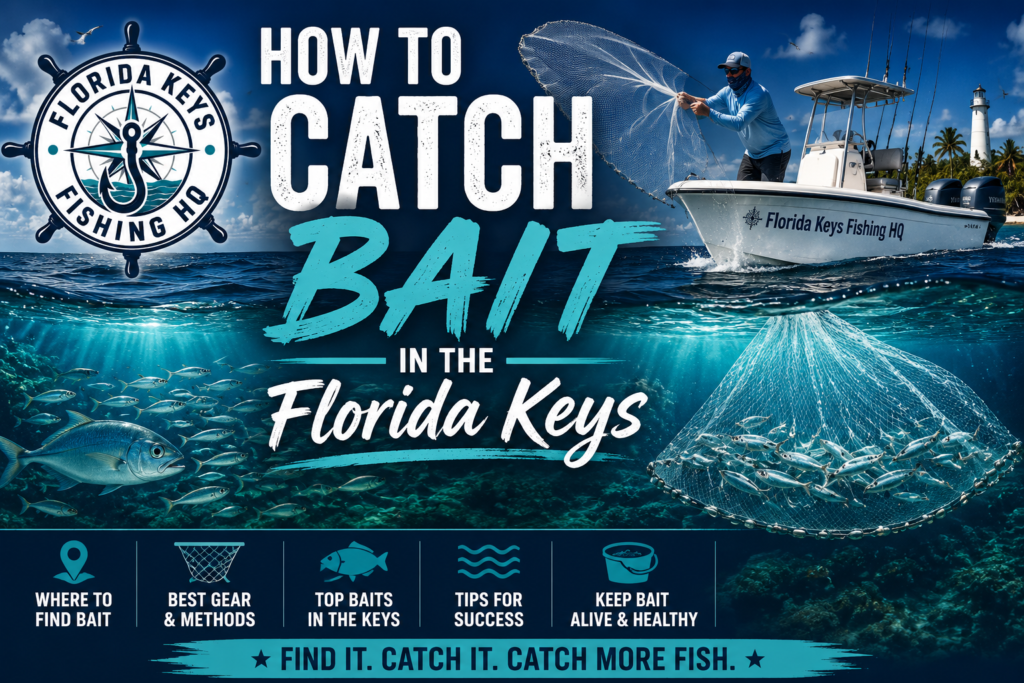
  • Finding live bait is one of the most important parts of a successful fishing trip in the Florida Keys. Whether you’re targeting mangrove snapper, yellowtail snapper, grouper, sailfish, mahi, tuna, or kingfish, fresh live bait consistently outfishes frozen bait.

    Knowing where bait gathers, when to catch it, and what equipment to use can dramatically improve your success on the water.

    Best Types of Live Bait in the Florida Keys

    The most popular live baits include:

    • Pilchards (Whitebait)
    • Ballyhoo
    • Threadfin Herring
    • Goggle Eyes
    • Blue Runners (Hardtails)
    • Pinfish
    • Speedos (Redtail Scad)
    • Ballyhoo

    Each species is effective for different types of fishing.

    Where to Find Live Bait

    Live bait is usually found anywhere baitfish have food and protection.

    Look around:

    • Patch reefs
    • Shallow grass flats
    • Sandy basins
    • Channel markers
    • Bridges
    • Marinas
    • Harbor entrances
    • Gulf-side flats
    • Reef edges

    Bait often schools over light-colored sand near structure where predators are less likely to ambush them.

    Finding Pilchards

    Pilchards are one of the most popular live baits in the Keys.

    Look for them:

    • Early in the morning
    • Over shallow grass flats
    • Around patch reefs
    • Near channel markers
    • Around bridges
    • In calm water with good visibility

    Birds diving and nervous water are often signs of schooling pilchards.

    Finding Ballyhoo

    Ballyhoo are commonly found:

    • Along reef edges
    • Over patch reefs
    • Around weed lines
    • In 10–40 feet of water

    Chumming with small pieces of oats or commercial chum can often bring schools within cast-net range.

    Finding Threadfin Herring

    Threadfins typically gather:

    • Around bridges
    • At channel markers
    • Around bait schools
    • Near deeper channels

    They often show well on sonar as dense schools suspended in the water column.

    Finding Blue Runners

    Blue runners usually hold:

    • Around offshore wrecks
    • Buoys
    • Artificial reefs
    • Navigation markers

    They can often be caught using small jigs or Sabiki rigs.

    Finding Pinfish

    Pinfish are abundant around:

    • Seagrass flats
    • Docks
    • Marinas
    • Mangroves
    • Shallow hard-bottom areas

    A small Sabiki rig tipped with shrimp is one of the easiest ways to catch them.

    Best Equipment for Catching Bait

    Most anglers carry:

    • Cast net
    • Sabiki rigs
    • Small jig heads
    • Chum bag
    • Live well
    • Aerator
    • Polarized sunglasses

    Each tool has its place depending on the bait species you’re targeting.
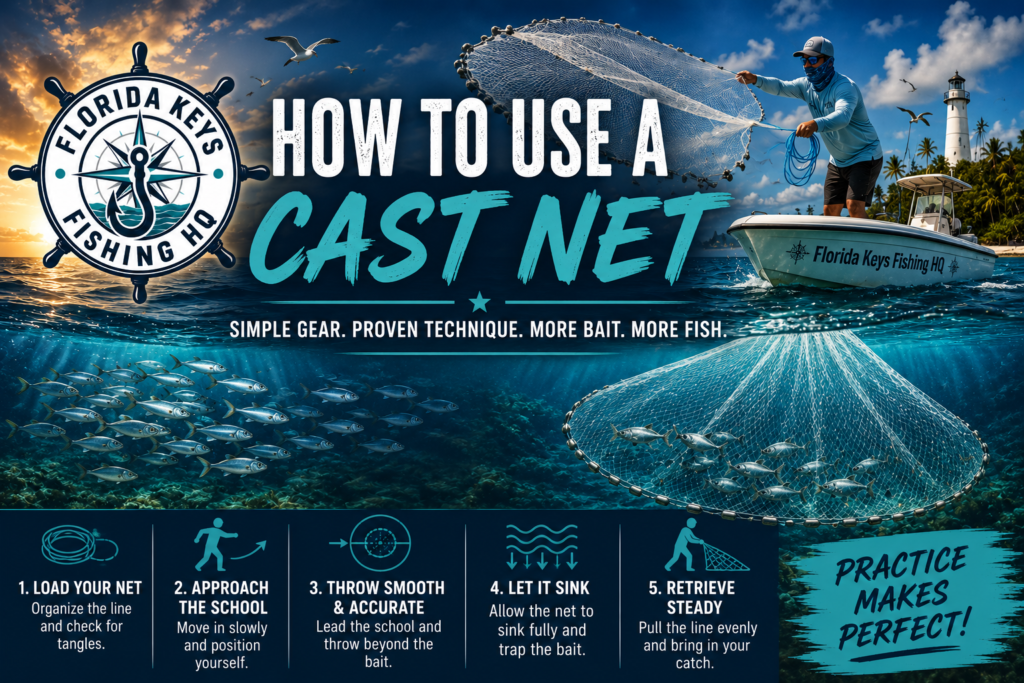
    A cast net is the fastest way to fill a live well.

    Tips:

    • Approach schools slowly.
    • Watch for nervous water.
    • Lead the school slightly.
    • Throw beyond the bait and let the net sink.
    • Retrieve smoothly.

    Practice makes a huge difference when throwing a cast net.

    Using Electronics to Find Bait

    Modern sonar can quickly reveal large bait schools.

    Look for:

    • Dense bait balls
    • Clouds suspended off the bottom
    • Fish stacked around structure
    • Birds diving over active schools

    Many anglers use side imaging to locate bait before making a cast.

    Keeping Live Bait Alive

    Healthy bait catches more fish.

    Tips:

    • Keep plenty of fresh water flowing through the live well.
    • Avoid overcrowding.
    • Handle bait as little as possible.
    • Remove dead bait immediately.
    • Match water temperature whenever possible.

    A lively baitfish will always outperform a weak one.

    Best Time to Catch Live Bait

    The best times are:

    • Early morning
    • Around sunrise
    • Before boat traffic increases
    • On moving tides

    Many bait schools disperse once the sun gets high and boat traffic picks up.

    Final Thoughts

    Learning how to catch your own live bait is one of the biggest advantages an angler can have in the Florida Keys. Fresh bait often makes the difference between a slow day and an unforgettable one.

    By learning where different bait species live, using the right equipment, and taking good care of your bait, you’ll greatly improve your success whether you’re reef fishing, offshore fishing, deep dropping, or targeting pelagic species.
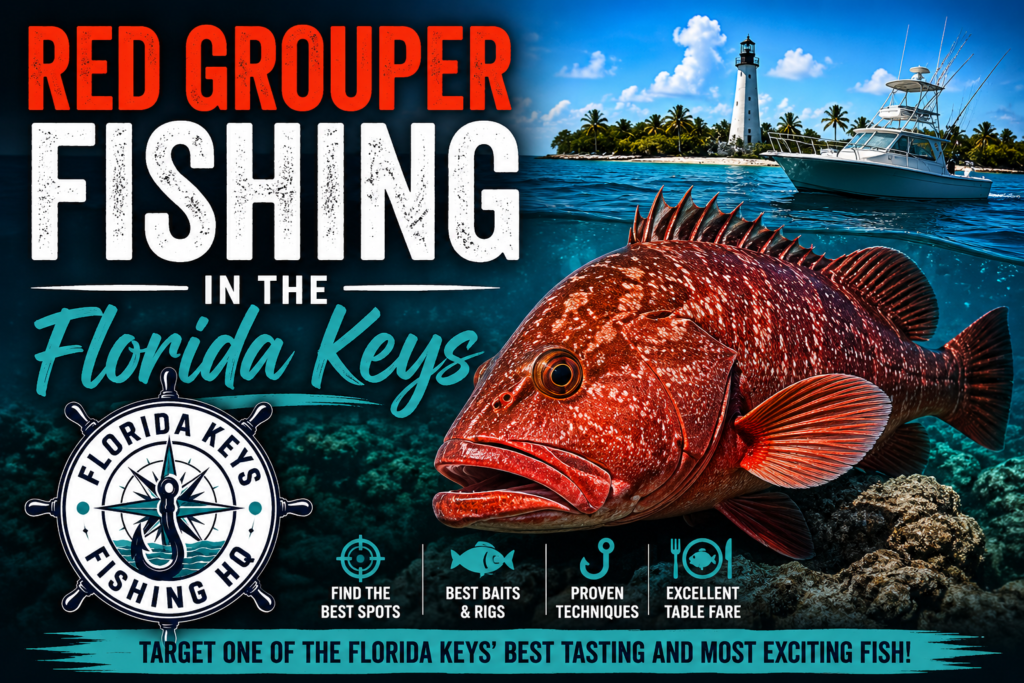
  • Red grouper are one of the most sought-after bottom fish in the Florida Keys. Known for their aggressive strikes, excellent table fare, and abundance on hard-bottom areas and reefs, red grouper provide exciting action for anglers fishing both nearshore and offshore.

    Whether you’re fishing natural reefs, artificial reefs, ledges, or hard-bottom areas, understanding where red grouper live and how they feed can dramatically improve your success.

    Where to Find Red Grouper in the Florida Keys

    Red grouper are commonly found around:

    • Natural reefs
    • Artificial reefs
    • Rock piles
    • Hard-bottom areas
    • Ledges
    • Patch reefs
    • Wrecks

    Unlike black grouper and gag grouper, red grouper often prefer lower-profile structure and hard-bottom habitat.

    Most Florida Keys red grouper are caught in:

    • 30–250 feet of water

    Larger fish are often found in deeper water and less pressured areas.

    Best Time to Catch Red Grouper

    Red grouper can be caught year-round in the Florida Keys.

    Many anglers experience their best fishing during:

    • Spring
    • Early Summer
    • Fall

    Calm weather and moderate current often produce the best conditions.

    Best Baits for Red Grouper

    Red grouper are aggressive predators and scavengers.

    Top baits include:

    Live Pinfish

    One of the most effective red grouper baits available.

    Live Grunts

    Excellent for targeting larger fish.

    Ballyhoo

    Produces fish around reefs and wrecks.

    Squid

    A reliable bait that catches grouper year-round.

    Cut Bonita

    A favorite when fishing deeper water.

    Threadfin Herring

    An excellent live bait option.

    Best Rig for Red Grouper

    The most popular setup is a simple knocker rig.

    Typical setup:

    • 40–80 lb braid
    • 50–80 lb fluorocarbon leader
    • 5/0–8/0 circle hook
    • Egg sinker sized for current conditions

    The goal is to keep your bait close to the bottom where grouper feed.

    Best Techniques

    Bottom Fishing

    The most productive method for red grouper.

    Anchor or drift over:

    • Hard bottom
    • Reef edges
    • Rock piles
    • Artificial reefs

    Live Bait Fishing

    Live bait often produces larger fish.

    Allow the bait to stay near the bottom where grouper are holding.

    Drift Fishing

    Drifting helps cover more structure and locate active fish.

    Many anglers use trolling motors or sea anchors to control drift speed.

    Signs of Good Red Grouper Habitat

    Look for:

    • Hard-bottom areas
    • Ledges
    • Isolated rock piles
    • Reef edges
    • Artificial reefs

    Using Navionics and sonar can dramatically improve your ability to locate productive grouper habitat.

    Are Red Grouper Good to Eat?

    Red grouper are considered one of the best-eating fish in the Florida Keys.

    Their meat is:

    • White
    • Firm
    • Mild flavored

    Popular cooking methods include:

    • Grilled
    • Fried
    • Blackened
    • Baked
    • Fish tacos

    Many anglers rank red grouper among their favorite table fish.

    Tips for Catching More Red Grouper

    • Fish close to the bottom.
    • Use fresh bait whenever possible.
    • Focus on hard-bottom areas.
    • Check isolated structure.
    • Keep moving until you locate active fish.
    • Use quality electronics to identify ledges and rock piles.

    Small pieces of structure often hold the biggest fish.

    Final Thoughts

    Red grouper are one of the most accessible and rewarding grouper species found in the Florida Keys. Their willingness to bite, excellent table quality, and abundance on reefs and hard-bottom areas make them a favorite target for both beginner and experienced anglers.

    By focusing on productive structure, using quality bait, and fishing close to the bottom, you’ll greatly increase your chances of landing a trophy red grouper.

  • The Florida Keys are one of the most popular destinations in the world for recreational lobster diving. Every year, thousands of divers and snorkelers head to the Keys in search of Florida spiny lobster hiding beneath coral heads, ledges, bridges, and patch reefs.

    Whether you’re participating in mini-season or the regular lobster season, understanding where lobster live and how to catch them legally can greatly improve your success.

    When Is Lobster Season in the Florida Keys?

    Florida offers two lobster seasons:

    Mini Season

    The Florida Keys mini-season is a special two-day recreational season held each summer, usually during the last consecutive Wednesday and Thursday of July.

    Mini-season allows recreational divers to harvest lobster before the regular season opens.

    Regular Season

    The regular lobster season runs from August 6 through March 31.

    Always check current FWC regulations before your trip, as dates and regulations can change.

    Where to Find Lobster

    Spiny lobster prefer structure that provides protection during the day.

    Common locations include:

    • Patch reefs
    • Rocky ledges
    • Bridge rubble
    • Coral heads
    • Artificial reefs
    • Shallow hard-bottom areas
    • Mangrove shorelines

    Most recreational lobster in the Florida Keys are found in water ranging from 3 to 30 feet deep.

    During the day, lobster typically hide in holes and under ledges.

    What Equipment Do You Need?

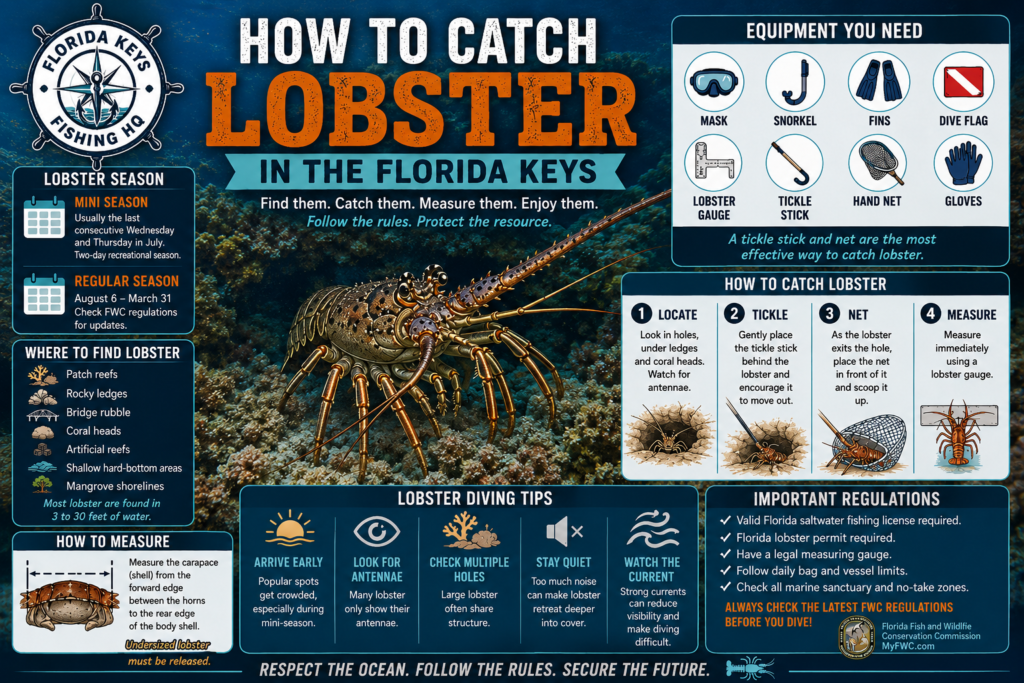
    Basic lobster gear includes:

    • Mask
    • Snorkel
    • Fins
    • Dive flag
    • Lobster gauge
    • Tickle stick
    • Hand net
    • Gloves
    • Measuring device

    A tickle stick and net combination is one of the most effective methods for catching lobster.

    How to Catch Lobster

    Step 1: Locate the Lobster

    Look underneath ledges, coral heads, and rocks.

    Signs of lobster include:

    • Long antennae sticking out of holes
    • Multiple lobster stacked together
    • Fresh tracks in the sand

    Step 2: Use a Tickle Stick

    Gently place the tickle stick behind the lobster.

    Slowly encourage the lobster to move forward out of its hiding spot.

    Step 3: Net the Lobster

    As the lobster exits the hole, position the net in front of it.

    Lobster naturally move backward, so guide it into the net and secure it.

    Step 4: Measure Immediately

    Every lobster must be measured before being placed in your catch bag.

    Never assume a lobster is legal without measuring it.

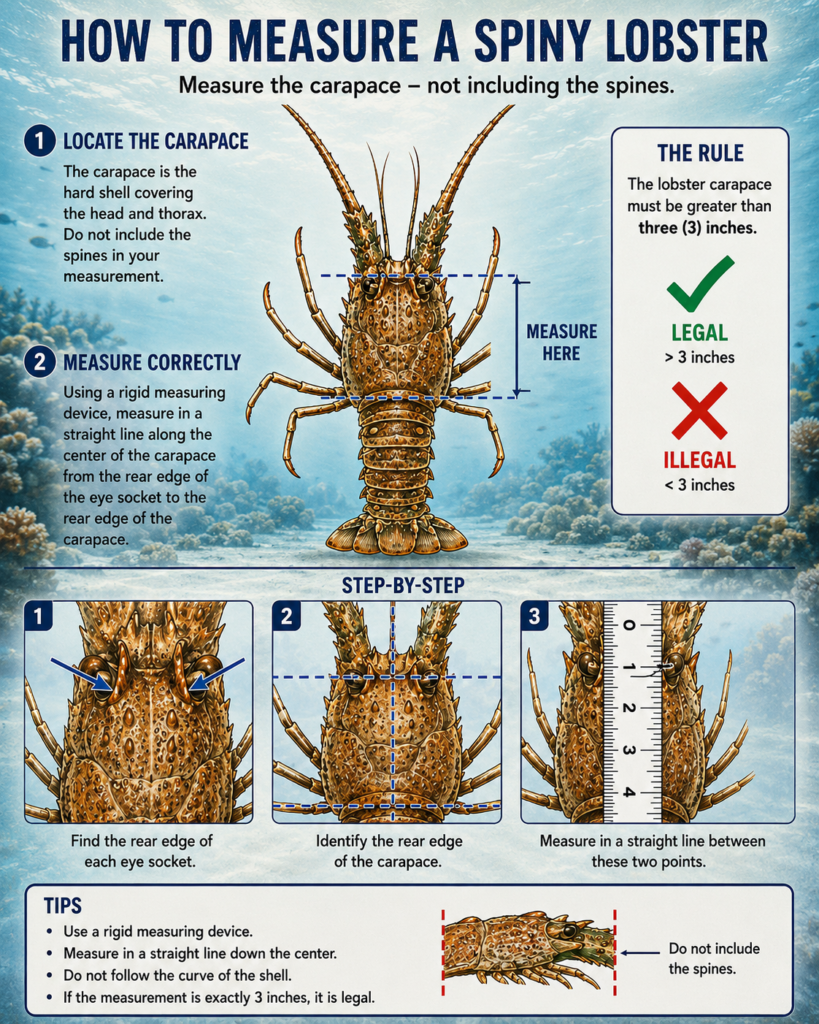
    How to Measure a Florida Spiny Lobster

    Florida regulations require lobster to meet a minimum carapace length.

    Measure from:

    • The forward edge between the horns
    • To the rear edge of the body shell

    A lobster gauge is required while harvesting.

    Undersized lobster must be released immediately.

    Lobster Diving Tips

    Arrive Early

    Popular areas receive heavy pressure, especially during mini-season.

    Look for Antennae

    Many lobster remain completely hidden except for their antennae.

    Check Multiple Holes

    Large lobster often share structure with several smaller lobster.

    Stay Quiet

    Excessive splashing and noise can cause lobster to retreat deeper into cover.

    Watch the Current

    Strong currents can make diving difficult and reduce visibility.

    Florida Keys Lobster Regulations

    Regulations can change, but some important rules include:

    • Possess a valid Florida saltwater fishing license if required.
    • Possess a Florida lobster permit if required.
    • Carry a legal measuring gauge.
    • Follow daily bag limits.
    • Follow vessel limits where applicable.
    • Respect all marine sanctuary and no-take zones.

    Always review the latest Florida Fish and Wildlife Conservation Commission (FWC) regulations before harvesting lobster.

    Common Mistakes

    Grabbing Before Measuring

    Always measure first.

    Ignoring Sanctuary Boundaries

    Many protected areas in the Florida Keys prohibit lobster harvesting.

    Diving Without a Flag

    A dive flag is required and significantly improves safety.

    Focusing Only on Reefs

    Some of the best lobster habitat is found along shallow ledges and hard-bottom areas.

    Final Thoughts

    Catching lobster in the Florida Keys is one of the most exciting outdoor activities available in South Florida. With the right equipment, a basic understanding of lobster behavior, and knowledge of current regulations, even beginners can enjoy a successful day on the water.

    Take your time, measure every lobster carefully, respect protected areas, and you’ll be well on your way to enjoying one of the Keys’ most popular traditions.

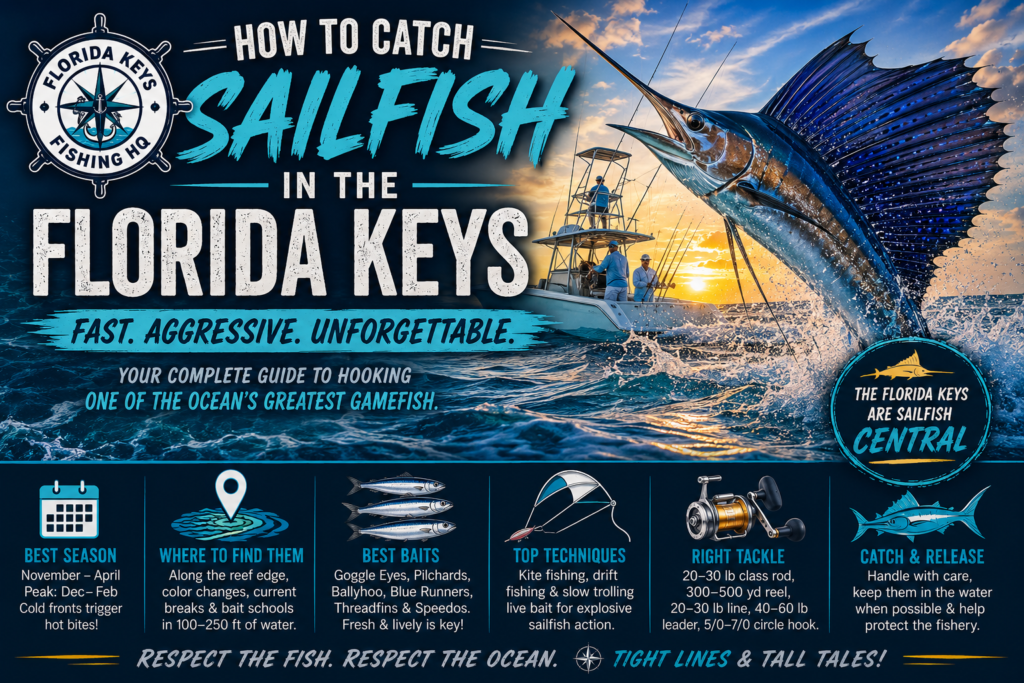
  • Florida Keys sailfishing is considered some of the best in the world. Every winter, thousands of sailfish migrate through the Keys, giving anglers an incredible opportunity to target one of the fastest and most exciting gamefish in the ocean.

    Whether you’re trolling, kite fishing, or drifting live bait, understanding where to find sailfish and how they feed can dramatically increase your chances of success.

    When Is the Best Time to Catch Sailfish in the Florida Keys?

    The peak sailfish season runs from:

    • November through April
    • Prime months: December, January, and February

    Cold fronts often trigger excellent sailfish action. Many experienced anglers plan trips immediately after a strong front passes through the Keys.

    Where to Find Sailfish in the Florida Keys

    Sailfish are typically found along the edge of the reef line and offshore waters where baitfish concentrate.

    Popular areas include:

    • Key Largo reef edge
    • Islamorada reef line
    • Marathon offshore reefs
    • Upper Keys color changes
    • Current edges along the Gulf Stream

    Most sailfish are caught in:

    • 100–250 feet of water
    • Areas with strong current
    • Locations holding schools of baitfish

    Bird activity, bait schools, and color changes are all signs worth investigating.

    Best Baits for Sailfish

    Live bait consistently produces the most sailfish.

    Top choices include:

    • Goggle Eyes
    • Pilchards
    • Ballyhoo
    • Blue Runners
    • Threadfin Herring
    • Speedos

    Healthy, lively bait is often more important than bait size.

    Best Sailfish Rigs

    Kite Fishing

    Kite fishing is widely considered the most effective sailfish technique in the Florida Keys.

    Benefits include:

    • Keeps bait near the surface
    • Creates natural presentation
    • Allows multiple baits to be fished simultaneously
    • Produces spectacular visual strikes

    Drift Fishing

    Drifting live bait along the reef edge is another productive method.

    This technique works especially well when:

    • Winds are light
    • Current is strong
    • Bait schools are concentrated

    Slow Trolling

    Slow trolling live baits behind the boat can help cover more water when fish are scattered.

    Recommended Tackle

    A typical sailfish setup includes:

    Rod

    • 20–30 lb class conventional rod

    Reel

    • Lever drag conventional reel
    • 300–500 yards of line capacity

    Main Line

    • 20–30 lb monofilament
    • 30–50 lb braid

    Leader

    • 40–60 lb fluorocarbon leader

    Hook

    • 5/0–7/0 circle hook

    Circle hooks improve hook-up rates and reduce injury to released fish.

    How Sailfish Feed

    Sailfish often use their bills to stun baitfish before eating them.

    Signs of feeding activity include:

    • Frigate birds diving
    • Nervous bait schools
    • Flying fish
    • Surface explosions

    When sailfish are actively feeding, action can be fast and exciting.

    Fighting a Sailfish

    Once hooked, sailfish are known for:

    • High-speed runs
    • Spectacular jumps
    • Long fights

    Maintain steady pressure and avoid excessive drag settings.

    Most Florida Keys anglers release sailfish to help preserve this incredible fishery.

    Tips for More Sailfish

    • Fish after cold fronts.
    • Focus on active bait schools.
    • Watch for bird activity.
    • Use fresh, lively bait.
    • Stay mobile if fish are not showing.
    • Pay attention to current breaks and color changes.

    Small adjustments can make a huge difference during a sailfish bite.

    Final Thoughts

    Sailfish are one of the most exciting fish you can target in the Florida Keys. Their speed, acrobatics, and aggressive strikes create unforgettable experiences for anglers of all skill levels.

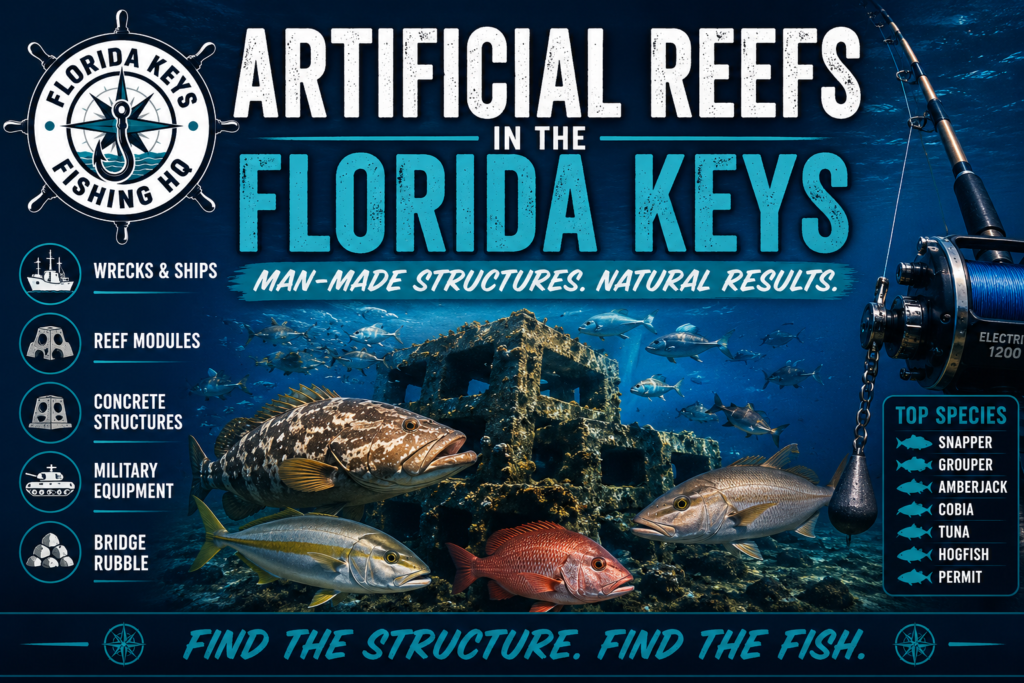
  • The Florida Keys are home to some of the most productive artificial reefs in the world. These man-made structures provide habitat for baitfish, snapper, grouper, amberjack, cobia, and countless other species.

    Whether you are fishing, diving, or spearfishing, understanding how artificial reefs work can help you locate fish and improve your success on the water.

    What Is an Artificial Reef?

    An artificial reef is a man-made structure intentionally placed on the ocean floor to create habitat for marine life.

    Common artificial reefs found in the Florida Keys include:

    • Ships and wrecks
    • Concrete structures
    • Bridge rubble
    • Military equipment
    • Reef modules
    • Large steel structures

    Over time these structures become covered with coral, sponges, algae, and marine growth, attracting baitfish and larger predators.

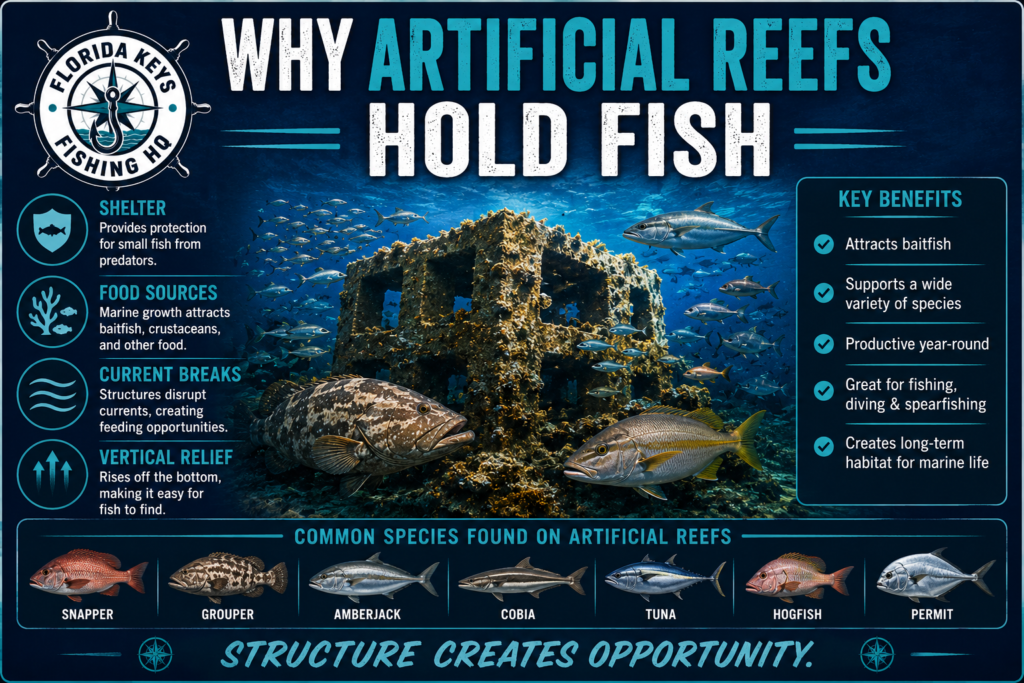
    Artificial reefs provide several important benefits:

    Shelter

    Small fish use the structure for protection from predators.

    Food Sources

    Marine growth attracts baitfish, crustaceans, and other food sources.

    Current Breaks

    Large structures disrupt ocean currents, creating feeding opportunities.

    Vertical Relief

    Many artificial reefs rise significantly off the bottom, making them easy for fish to locate.

    Popular Species Found on Artificial Reefs

    Artificial reefs throughout the Florida Keys commonly attract:

    • Mangrove Snapper
    • Yellowtail Snapper
    • Mutton Snapper
    • Gag Grouper
    • Black Grouper
    • Amberjack
    • Cobia
    • Permit
    • Barracuda
    • Kingfish
    • Blackfin Tuna
    • Hogfish

    Different species often use different parts of the structure.

    How to Find Artificial Reefs

    Modern electronics make finding artificial reefs easier than ever.

    Use Navionics

    Many artificial reefs appear directly on Navionics charts.

    Look for:

    • Wreck symbols
    • Reef markers
    • Artificial reef labels
    • Bottom irregularities

    Use Sonar

    When approaching a reef:

    • Reduce speed
    • Scan the area carefully
    • Look for bait schools
    • Look for fish suspended above the structure

    Many predators hold above the reef rather than directly on it.

    Best Techniques for Fishing Artificial Reefs

    Bottom Fishing

    Bottom fishing is one of the most productive methods.

    Popular targets include:

    • Mangrove Snapper
    • Grouper
    • Mutton Snapper

    Use live bait, cut bait, or knocker rigs near structure.

    Vertical Jigging

    Vertical jigs work extremely well around wrecks and reef systems.

    This technique is especially effective for:

    • Amberjack
    • Blackfin Tuna
    • Grouper

    Live Bait Fishing

    Live pilchards, pinfish, grunts, and blue runners often produce larger fish.

    Artificial Reefs and Spearfishing

    Many artificial reefs provide excellent spearfishing opportunities.

    Always verify local regulations before entering the water and ensure the reef is open to spearfishing.

    Common spearfishing targets include:

    • Mangrove Snapper
    • Hogfish
    • Grouper
    • Mutton Snapper

    Visibility and current conditions can vary significantly.

    Best Conditions for Artificial Reef Fishing

    Artificial reefs can produce year-round, but success often improves when:

    • Water clarity is good
    • Current is moving
    • Baitfish are present
    • Weather is stable

    Always spend time searching for bait before committing to a location.

    Final Thoughts

    Artificial reefs are among the most productive fishing structures in the Florida Keys. They attract bait, provide shelter, and consistently hold a wide variety of gamefish.

    By learning how to identify artificial reefs on your charts and understanding how fish use the structure, you can dramatically improve your fishing success throughout the Keys.

    Related Articles

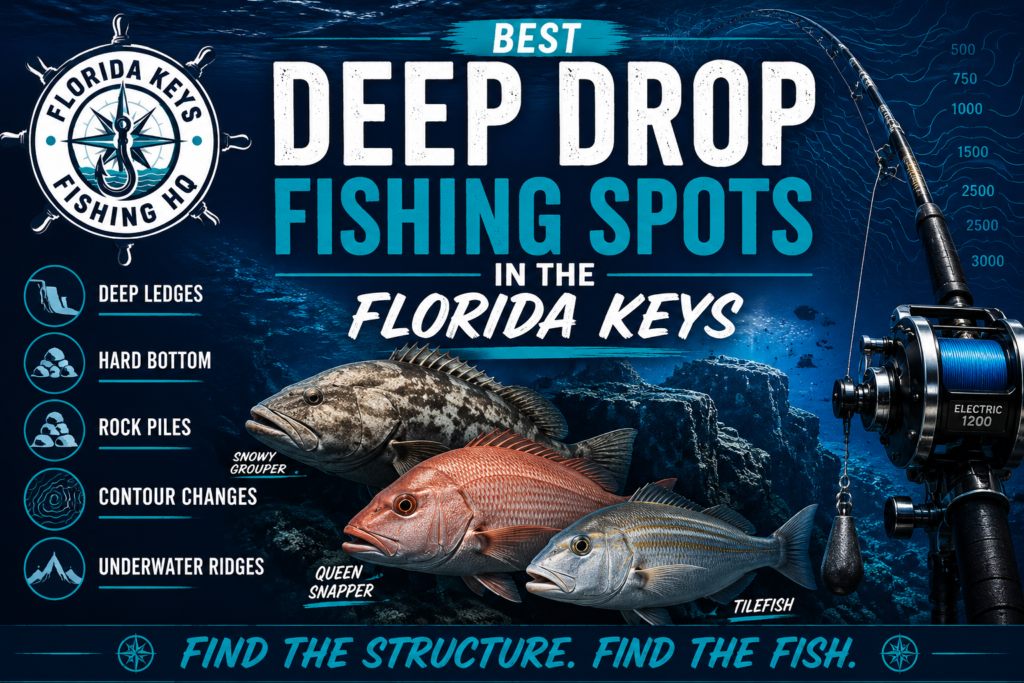
  • Deep drop fishing in the Florida Keys offers anglers the opportunity to catch some of the most prized fish in the Atlantic Ocean. Species such as snowy grouper, queen snapper, yellowedge grouper, tilefish, blackbelly rosefish, and barrelfish can all be found in the deep waters off the Keys.

    The secret isn’t having someone’s coordinates. The most successful deep drop fishermen learn how to identify productive bottom structure and locate areas where deep-water species naturally gather.

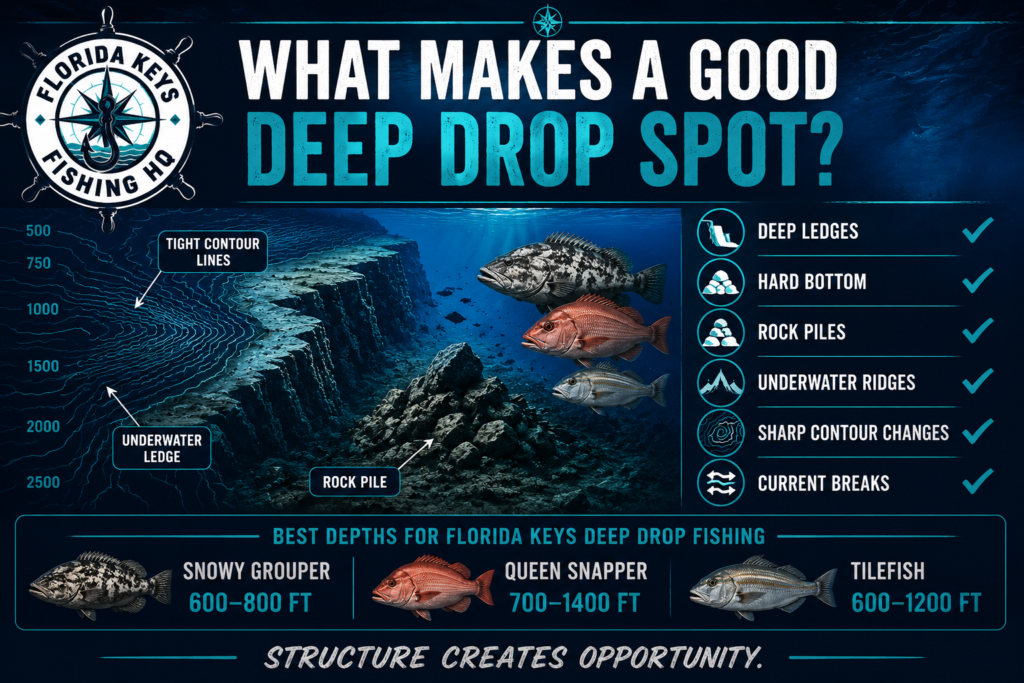
    The best deep drop fishing spots share several characteristics:

    • Sharp contour changes
    • Deep ledges
    • Rock piles
    • Hard bottom
    • Underwater ridges
    • Canyons and drop-offs
    • Areas with strong current flow

    These features create feeding opportunities and provide habitat for deep-water species.

    Productive Depth Ranges

    Different species are commonly found at different depths.

    SpeciesTypical Depth
    Snowy Grouper600-800 ft
    Queen Snapper700-1400 ft
    Tilefish600-1200 ft
    Blackbelly Rosefish700-1200 ft
    Yellowedge Grouper700-1200 ft
    Barrelfish800-1500 ft

    Always pay attention to the depth where fish are caught and search for similar structure nearby.

    The Edge of the Continental Shelf

    One of the most productive deep drop areas in the Florida Keys is the edge of the continental shelf.

    As the bottom drops from several hundred feet into much deeper water, underwater ledges and contour breaks are formed. These structures concentrate bait and attract predators.

    Many successful deep drop fishermen focus their efforts along these transitions rather than fishing flat bottom.

    Look for Contour Changes

    One of the easiest ways to find potential deep drop spots is by studying contour lines on Navionics.

    Areas where contour lines are tightly packed together indicate steep bottom changes.

    These areas often hold:

    • Snowy Grouper
    • Queen Snapper
    • Tilefish
    • Yellowedge Grouper

    The steeper the change, the more likely fish are to use the area.

    Rock Piles and Hard Bottom

    Deep-water species frequently gather around isolated rock piles and hard-bottom areas.

    These locations provide:

    • Food
    • Current breaks
    • Ambush points
    • Protection

    Even a small rock pile can hold multiple fish when surrounded by otherwise featureless bottom.

    How to Find Deep Drop Spots Using Navionics

    Navionics is one of the most valuable tools for locating productive deep drop areas.

    Look for:

    • Sharp contour changes
    • Fingers extending into deeper water
    • Underwater points
    • Isolated humps
    • Deep ledges
    • Areas where contours bend sharply

    Spend time studying maps before leaving the dock. Finding good structure is often more important than having exact coordinates.

    Drift or Anchor?

    Most anglers drift when deep dropping.

    Drifting allows you to:

    • Cover more ground
    • Locate active fish
    • Search new structure

    Anchoring can be effective when fish are concentrated on a small area, but it is often more difficult in deep water with strong current.

    Species Commonly Caught While Deep Dropping

    Deep drop anglers in the Florida Keys regularly catch:

    • Snowy Grouper
    • Queen Snapper
    • Tilefish
    • Blackbelly Rosefish
    • Yellowedge Grouper
    • Barrelfish
    • Misty Grouper
    • Silk Snapper

    Multiple species may be caught from the same piece of structure.

    Final Thoughts

    The best deep drop fishing spots in the Florida Keys are rarely defined by a single GPS coordinate. Instead, successful anglers learn to identify productive bottom structure, study contour lines, and focus on areas where deep-water species naturally live and feed.

    By targeting ledges, hard bottom, underwater ridges, and major contour changes, you can consistently locate fish and develop your own collection of productive deep drop spots.

    Associated Articles

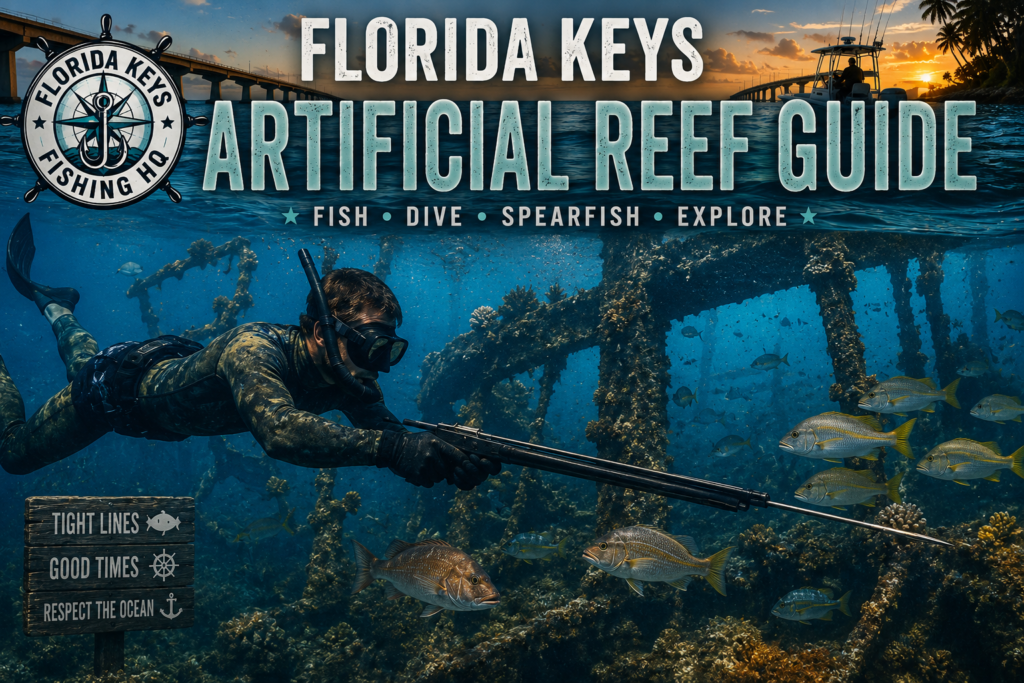
  • Florida Keys Artificial Reef Guide (2026 Edition)

    The Florida Keys are home to some of the most productive artificial reefs in the world. These intentionally placed wrecks and structures attract baitfish, snapper, grouper, pelagic species, and countless other marine life.

    Whether you’re fishing, diving, snorkeling, or spearfishing where permitted, understanding the Florida Keys artificial reef system can dramatically improve your success on the water.

    Why Artificial Reefs Are So Productive

    Artificial reefs create structure where little or none previously existed.

    Over time these reefs become covered with coral, sponges, algae, and other marine growth. This attracts baitfish, which in turn attract larger predators such as:

    • Mangrove Snapper
    • Yellowtail Snapper
    • Mutton Snapper
    • Black Grouper
    • Gag Grouper
    • Cobia
    • Amberjack
    • Kingfish
    • Barracuda
    • Permit

    The larger the structure, the larger the ecosystem it can support.

    Spiegel Grove

    The Spiegel Grove is one of the most famous artificial reefs in the world.

    Location

    Key Largo

    Length

    Approximately 510 feet

    Depth

    65 to 130 feet

    Species Found

    • Black Grouper
    • Mutton Snapper
    • Mangrove Snapper
    • Amberjack
    • Cobia
    • Barracuda

    The massive size of the Spiegel Grove makes it one of the best places in the Florida Keys to locate structure-oriented species.

    USS Duane

    The Duane is another legendary Key Largo wreck.

    Depth

    Approximately 120 feet

    Species Found

    • Mutton Snapper
    • Black Grouper
    • Amberjack
    • Permit
    • Barracuda

    Strong currents frequently push bait across the wreck, creating excellent fishing opportunities.

    Eagle Wreck

    The Eagle Wreck is a favorite among divers and fishermen alike.

    Depth

    Approximately 110 feet

    Species Found

    • Mangrove Snapper
    • Yellowtail Snapper
    • Grouper
    • Permit
    • Cobia

    The Eagle often holds large schools of baitfish and can be extremely productive during seasonal migrations.

    Thunderbolt Wreck

    Located in the Middle Keys, the Thunderbolt is one of the most popular wrecks in Marathon.

    Depth

    Approximately 120 feet

    Species Found

    • Grouper
    • Snapper
    • Amberjack
    • Cobia

    The wreck sits upright and creates substantial relief from the surrounding seafloor.

    Adolphus Busch Senior

    Located offshore of Islamorada.

    Depth

    Approximately 110 feet

    Species Found

    • Mangrove Snapper
    • Mutton Snapper
    • Grouper
    • Amberjack

    This wreck frequently produces quality fish throughout the year.

    What To Look For Around Artificial Reefs

    The reef itself is not always where the fish are holding.

    Look for:

    • Current edges
    • Bait schools
    • Down-current structure
    • Sand-to-rock transitions
    • Nearby ledges
    • Bottom relief

    Many of the largest fish hold just off the wreck rather than directly on top of it.

    Fishing Artificial Reefs

    Artificial reefs can be productive using:

    Bottom Fishing

    • Live pinfish
    • Ballyhoo
    • Pilchards
    • Squid

    Vertical Jigging

    • Butterfly jigs
    • Speed jigs
    • Knife jigs

    Live Baiting

    • Blue runners
    • Pilchards
    • Goggle eyes

    Safety Considerations

    Always monitor:

    • Current strength
    • Boat traffic
    • Weather conditions
    • Fishing regulations
    • Protected zones

    Some artificial reefs are located in heavily trafficked areas and require careful boat positioning.

    Final Thoughts

    Florida Keys artificial reefs provide some of the best fishing opportunities in the state. From the Spiegel Grove in Key Largo to the Thunderbolt in Marathon, these structures attract baitfish and predators year-round.

    If you’re looking for consistent action, artificial reefs should be a regular part of your Florida Keys fishing strategy.

    Related Articles

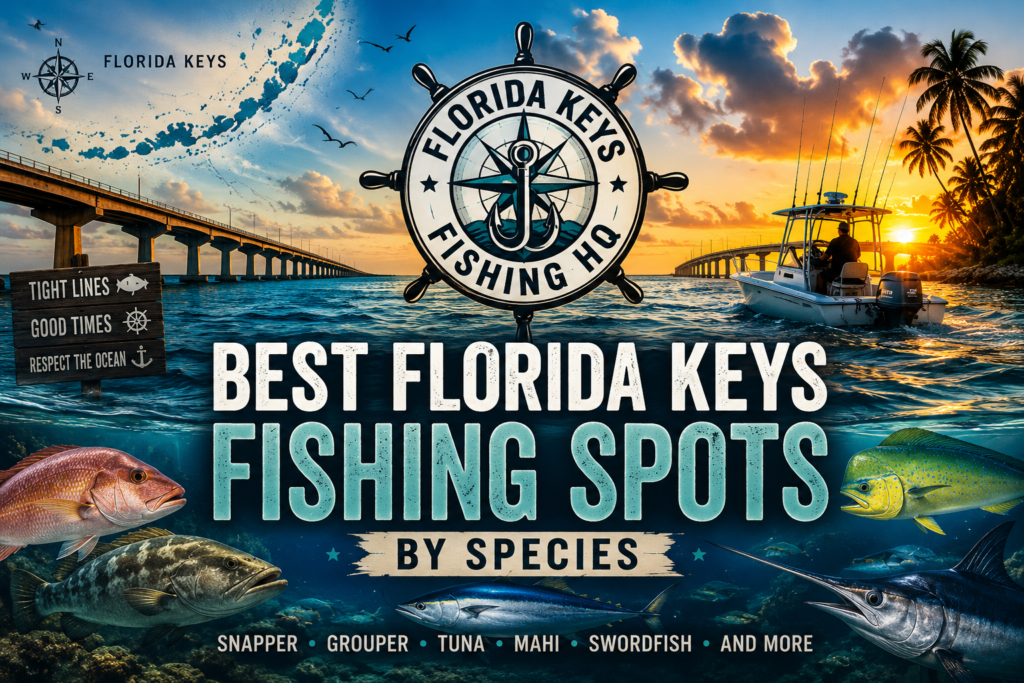
  • Best Florida Keys Fishing Spots by Species (2026 Guide)

    The Florida Keys offer some of the best fishing opportunities in the world. From shallow-water mangrove snapper to deep-water snowy grouper and swordfish, knowing where each species lives can dramatically increase your success.

    This guide breaks down the best Florida Keys fishing spots by species and explains the types of structure, depths, and areas that consistently produce fish throughout the Keys.

    Mangrove Snapper

    Mangrove snapper can be found throughout the Florida Keys and are one of the most popular species for both boat and shore anglers.

    Best Areas

    • Bridges
    • Mangrove shorelines
    • Residential canals
    • Patch reefs
    • Artificial reefs

    Typical Depth

    • 5 to 120 feet

    What to Look For

    Current flow, structure, dock pilings, bridge pilings, and rocky bottom.

    Related Guide: Mangrove Snapper Fishing Guide (2026 Florida Keys Edition)

    Yellowtail Snapper

    Yellowtail snapper are commonly targeted along the reef tract and respond extremely well to a steady chum slick.

    Best Areas

    • Outer reef edge
    • Coral reefs
    • Patch reefs
    • Reef drop-offs

    Typical Depth

    • 20 to 120 feet

    What to Look For

    Clean water, current, and active chum lines.

    Related Guide: Yellowtail Snapper Fishing in the Florida Keys (2026 Guide)

    Mutton Snapper

    Mutton snapper are prized for their size and fighting ability.

    Best Areas

    • Offshore wrecks
    • Reef edges
    • Gravel bottoms
    • Hard-bottom areas

    Typical Depth

    • 50 to 250 feet

    What to Look For

    Structure near sandy areas and strong current.

    Black Grouper

    Black grouper prefer heavy structure and often stay close to reefs and wrecks.

    Best Areas

    • Natural reefs
    • Artificial reefs
    • Deep ledges
    • Shipwrecks

    Typical Depth

    • 40 to 300 feet

    What to Look For

    Large rocks, ledges, and reef systems.

    Related Guide: Black Grouper Fishing in the Florida Keys (2026 Guide)

    Gag Grouper

    Gag grouper are often found on deeper structure and rocky bottom.

    Best Areas

    • Offshore ledges
    • Deep reefs
    • Artificial reefs

    Typical Depth

    • 80 to 300 feet

    What to Look For

    Bottom relief and hard structure.

    Related Guide: Gag Grouper Fishing in the Florida Keys (2026 Guide)

    Snowy Grouper

    Snowy grouper are a favorite target for deep drop anglers fishing offshore from Key Largo and the Upper Keys.

    Best Areas

    • Deep contour edges
    • Offshore ledges
    • Bottom structure in deep water

    Typical Depth

    • 600 to 1,200 feet

    What to Look For

    Sharp contour changes, isolated bottom structure, and hard bottom.

    Related Guides:

    • How to Find Snowy Grouper in the Florida Keys (2026 Guide)
    • Best Snowy Grouper Rig Setup (2026 Guide)

    Queen Snapper

    Queen snapper inhabit deeper offshore waters and are commonly caught while deep dropping.

    Best Areas

    • Deep offshore structure
    • Bottom ledges
    • Steep drop-offs

    Typical Depth

    • 600 to 1,500 feet

    What to Look For

    Deep structure near contour changes.

    Related Guide: Queen Snapper Fishing in the Florida Keys (2026 Guide)

    Tilefish

    Tilefish live in deep offshore waters and are often targeted alongside snowy grouper and queen snapper.

    Best Areas

    • Mud bottoms
    • Deep contour lines
    • Offshore drop-offs

    Typical Depth

    • 600 to 1,500 feet

    What to Look For

    Soft bottom adjacent to structure.

    Related Guide: Tilefish Fishing in the Florida Keys (2026 Guide)

    Swordfish

    The Florida Keys are one of the best places in the world to target daytime swordfish.

    Best Areas

    • Gulf Stream edge
    • Deep offshore canyons
    • Steep drop-offs

    Typical Depth

    • 1,200 to 2,000 feet

    What to Look For

    Temperature breaks, current edges, and bottom contour changes.

    Related Guide: Swordfish Fishing in the Florida Keys (2026 Guide)

    Blackfin Tuna

    Blackfin tuna are highly migratory and often feed around current breaks and offshore structure.

    Best Areas

    • Offshore humps
    • Reef edge
    • Current rips

    Typical Depth

    • Surface to 300 feet

    What to Look For

    Bird activity, bait schools, and current lines.

    Related Guide: Blackfin Tuna Fishing in the Florida Keys (2026 Guide)

    Mahi-Mahi

    Mahi are one of the most exciting offshore species available in the Keys.

    Best Areas

    • Weed lines
    • Floating debris
    • Current edges

    Typical Depth

    • Surface waters offshore

    What to Look For

    Sargassum weed, birds, and floating structure.

    Related Guide: Mahi-Mahi Fishing in the Florida Keys (2026 Guide)

    Final Thoughts

    The best Florida Keys fishing spots depend on the species you are targeting. Whether you’re fishing bridges for mangrove snapper, reefs for yellowtail, or dropping in 1,000 feet of water for snowy grouper and queen snapper, understanding habitat and structure is the key to success.

    Before heading out, always review current regulations, weather conditions, and seasonal closures. With the right location and setup, the Florida Keys can provide world-class fishing opportunities year-round.

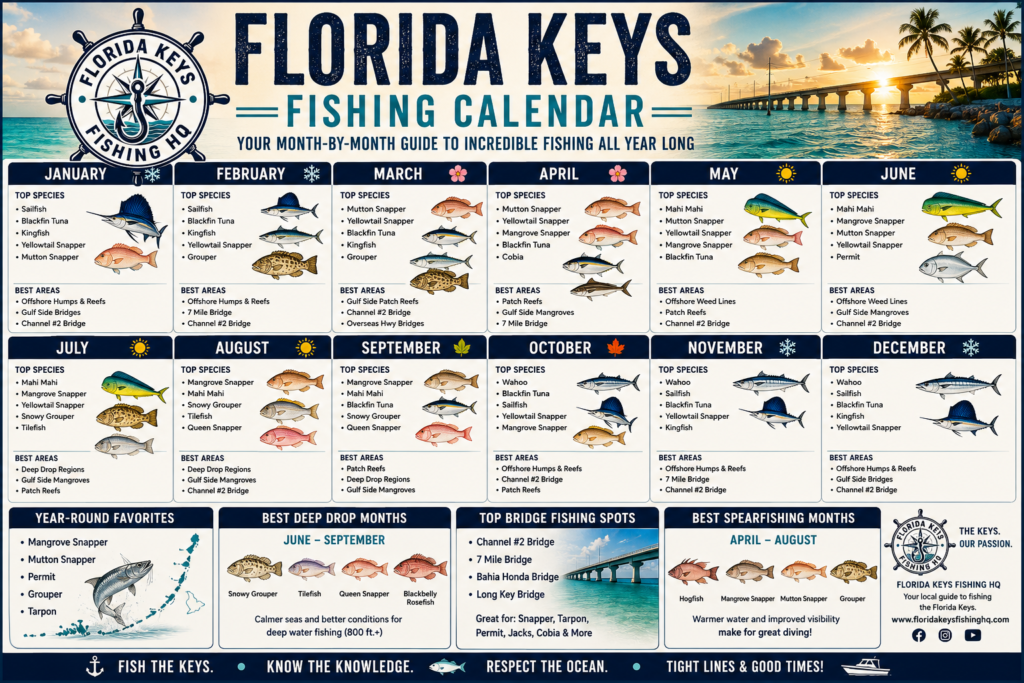
  • Florida Keys Fishing Calendar (2026 Guide)

    Introduction

    The Florida Keys offer world-class fishing opportunities throughout the year. While some species are available year-round, others have peak seasons when fishing is at its best. Understanding what fish are most active each month can help anglers plan successful trips and target the species they want most.

    This Florida Keys Fishing Calendar provides a month-by-month overview of some of the most popular game fish found throughout the Keys.

    Top Species:

    • Blackfin Tuna
    • Sailfish
    • Kingfish
    • Yellowtail Snapper
    • Mutton Snapper

    Winter cold fronts often produce excellent offshore fishing conditions, especially for sailfish and blackfin tuna.

    Top Species:

    • Sailfish
    • Blackfin Tuna
    • Kingfish
    • Yellowtail Snapper
    • Grouper

    February continues to provide some of the best offshore action of the year.

    Top Species:

    • Mutton Snapper
    • Yellowtail Snapper
    • Blackfin Tuna
    • Kingfish
    • Grouper

    As water temperatures begin to rise, snapper fishing often improves significantly.

    Top Species:

    • Mutton Snapper
    • Yellowtail Snapper
    • Mangrove Snapper
    • Blackfin Tuna
    • Cobia

    Spring fishing can be outstanding throughout the Florida Keys.

    Top Species:

    • Mahi-Mahi
    • Mutton Snapper
    • Yellowtail Snapper
    • Mangrove Snapper
    • Blackfin Tuna

    May marks the beginning of excellent mahi-mahi fishing offshore.

    Top Species:

    • Mahi-Mahi
    • Mangrove Snapper
    • Mutton Snapper
    • Yellowtail Snapper
    • Permit

    June is one of the most productive months for a variety of species.

    Top Species:

    • Mahi-Mahi
    • Mangrove Snapper
    • Yellowtail Snapper
    • Snowy Grouper
    • Tilefish

    Summer weather often allows anglers to access deeper offshore waters.

    Top Species:

    • Mangrove Snapper
    • Mahi-Mahi
    • Snowy Grouper
    • Tilefish
    • Queen Snapper

    Deep drop fishing is often excellent during calm summer conditions.

    Top Species:

    • Mangrove Snapper
    • Mahi-Mahi
    • Blackfin Tuna
    • Snowy Grouper
    • Queen Snapper

    Many anglers enjoy lighter fishing pressure during September.

    Top Species:

    • Wahoo
    • Blackfin Tuna
    • Sailfish
    • Yellowtail Snapper
    • Mangrove Snapper

    Cooling water temperatures begin to bring more pelagic species into the area.

    Top Species:

    • Wahoo
    • Sailfish
    • Blackfin Tuna
    • Yellowtail Snapper
    • Kingfish

    November is often considered one of the best months for wahoo fishing.

    Top Species:

    • Wahoo
    • Sailfish
    • Blackfin Tuna
    • Kingfish
    • Yellowtail Snapper

    Winter fishing patterns return and offshore action can be outstanding.

    Best Deep Drop Fishing Months

    Many anglers target deep-water species year-round, but some of the most productive months include:

    • June
    • July
    • August
    • September

    These months often provide calmer seas and more opportunities to fish depths exceeding 800 feet.

    Popular deep drop species include:

    • Snowy Grouper
    • Tilefish
    • Queen Snapper
    • Blackbelly Rosefish

    Best Spearfishing Months

    While spearfishing can be productive year-round, many divers prefer:

    • April
    • May
    • June
    • July
    • August

    These months often offer warmer water and improved visibility.

    Popular targets include:

    • Hogfish
    • Mangrove Snapper
    • Mutton Snapper
    • Grouper

    Final Thoughts

    There is no bad time to fish in the Florida Keys. Every month offers opportunities to target different species, from offshore pelagics and reef fish to deep drop species and inshore favorites.

    Understanding seasonal patterns can help anglers maximize their success and plan trips around their preferred target species.

    Related Florida Keys Fishing Guides

    Planning your next fishing trip? Check out these helpful guides:

    Wahoo Fishing in the Florida Keys (2026 Guide)

    Learn when and where to target one of the fastest fish in the ocean.

    Mahi-Mahi Fishing in the Florida Keys (2026 Guide)

    Discover the best seasons, locations, and techniques for catching mahi.

    Snowy Grouper Fishing in the Florida Keys (2026 Guide)

    Explore one of the Keys’ premier deep drop species.

    Mangrove Snapper Fishing in the Florida Keys (2026 Guide)

    Learn how to consistently catch mangrove snapper throughout the year.

    Best Florida Keys Bridges for Fishing (2026 Guide)

    Find productive bridge fishing locations throughout the Keys.

  • Introduction

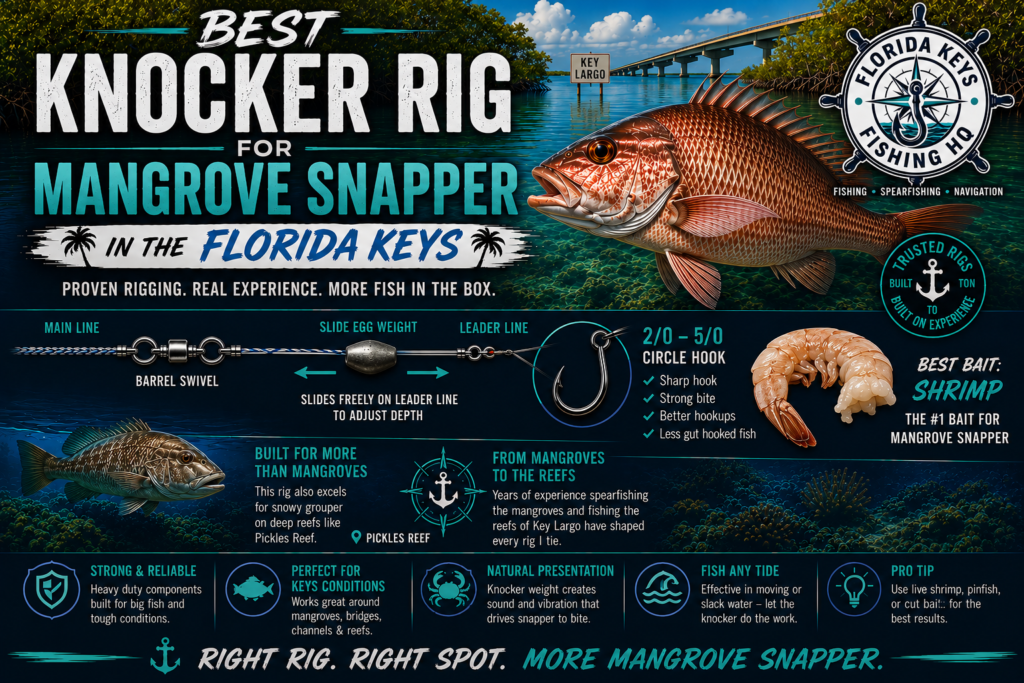
    When it comes to catching mangrove snapper in the Florida Keys, few rigs are as effective as the knocker rig. Simple, versatile, and highly effective, the knocker rig allows anglers to present bait naturally while keeping it close to structure where mangrove snapper feed.

    Whether you’re fishing bridges, reefs, wrecks, patch reefs, or mangrove shorelines, a properly rigged knocker rig can dramatically improve your success.

    What Is a Knocker Rig?

    A knocker rig consists of an egg sinker that slides directly on the leader and rests against the hook. This simple design allows bait to sink naturally while maintaining excellent sensitivity.

    The knocker rig is especially effective when targeting:

    • Mangrove snapper
    • Mutton snapper
    • Yellowtail snapper
    • Grouper
    • Hogfish

    Because the weight remains close to the bait, anglers maintain better contact with the bottom while still allowing natural movement.

    Why Knocker Rigs Work So Well

    Mangrove snapper often hold tight to structure and can be extremely cautious.

    The knocker rig offers several advantages:

    • Natural bait presentation
    • Excellent sensitivity
    • Easy to fish around structure
    • Quick sink rate
    • Simple construction

    Many Florida Keys anglers consider the knocker rig their go-to setup for snapper fishing.

    Best Knocker Rig Setup

    Leader Material

    • 20–40 lb fluorocarbon for average mangrove snapper
    • 40–60 lb fluorocarbon for larger fish around heavy structure

    Hook Size

    Recommended circle hook sizes:

    • 2/0
    • 3/0
    • 4/0

    Larger fish may require 5/0 hooks.

    Egg Weight Size

    Weight selection depends on current and depth:

    • 1/4 oz to 1 oz for shallow water
    • 1 oz to 3 oz for moderate current
    • 3 oz to 6 oz for deeper reefs and bridges

    Always use the lightest weight possible while maintaining bottom contact.

    Best Baits for Knocker Rigs

    Top-producing baits include:

    • Live shrimp
    • Pilchards
    • Pinfish
    • Ballyhoo chunks
    • Squid
    • Cut bait

    Fresh bait typically produces the best results.

    Where to Fish a Knocker Rig

    Knocker rigs excel around:

    • Channel 2 Bridge
    • Florida Keys bridges
    • Patch reefs
    • Offshore reefs
    • Wrecks
    • Mangrove shorelines

    The rig is particularly effective whenever fish are holding close to structure.

    Common Knocker Rig Mistakes

    Many anglers:

    • Use leaders that are too heavy
    • Fish weights that are too large
    • Set the hook too aggressively with circle hooks
    • Ignore current direction

    Allow circle hooks to do their job by simply reeling steadily when a fish bites.

    Custom Knocker Rigs Available

    Don’t want to tie your own?

    We offer custom-built knocker rigs designed specifically for Florida Keys fishing.

    Available options include:

    • Monofilament or fluorocarbon leaders
    • 10 lb to 100 lb leader material
    • Circle hooks or J-hooks
    • Hook sizes from 1/0 to 13/0
    • Standard or glow beads
    • Barrel swivel or snap swivel connections
    • Leader lengths from 1 to 10 feet

    For pricing, recommendations, or custom orders, email:

    Floridakeysfishinghq@gmail.com

    We’re happy to recommend a setup based on your target species and fishing conditions.

    Final Thoughts

    The knocker rig remains one of the most effective setups for mangrove snapper fishing in the Florida Keys. Its simplicity, versatility, and natural bait presentation make it a favorite among local anglers.

    Whether you’re fishing bridges, reefs, or wrecks, a properly configured knocker rig can help you consistently catch more snapper throughout the year.

    Related Florida Keys Snapper Fishing Guides

    Looking to catch more snapper in the Florida Keys? Check out these helpful guides:

    Mangrove Snapper Fishing in the Florida Keys (2026 Guide)

    Learn where to find mangrove snapper and the best techniques for consistently catching them.

    Best Bait for Mangrove Snapper in the Florida Keys (2026 Guide)

    Discover which live and cut baits consistently produce the best results.

    Channel 2 Bridge Fishing Guide (2026 Guide)

    One of the most productive places in the Keys to fish a knocker rig.

    Best Florida Keys Bridges for Fishing (2026 Guide)

    Explore other productive bridge fishing opportunities throughout the Keys.

    Custom Fishing Rigs

    Need a professionally tied knocker rig? Visit our Custom Fishing Rigs page or email Floridakeysfishinghq@gmail.com for recommendations and pricing.