Florida Keys sailfishing is considered some of the best in the world. Every winter, thousands of sailfish migrate through the Keys, giving anglers an incredible opportunity to target one of the fastest and most exciting gamefish in the ocean.
Whether you’re trolling, kite fishing, or drifting live bait, understanding where to find sailfish and how they feed can dramatically increase your chances of success.
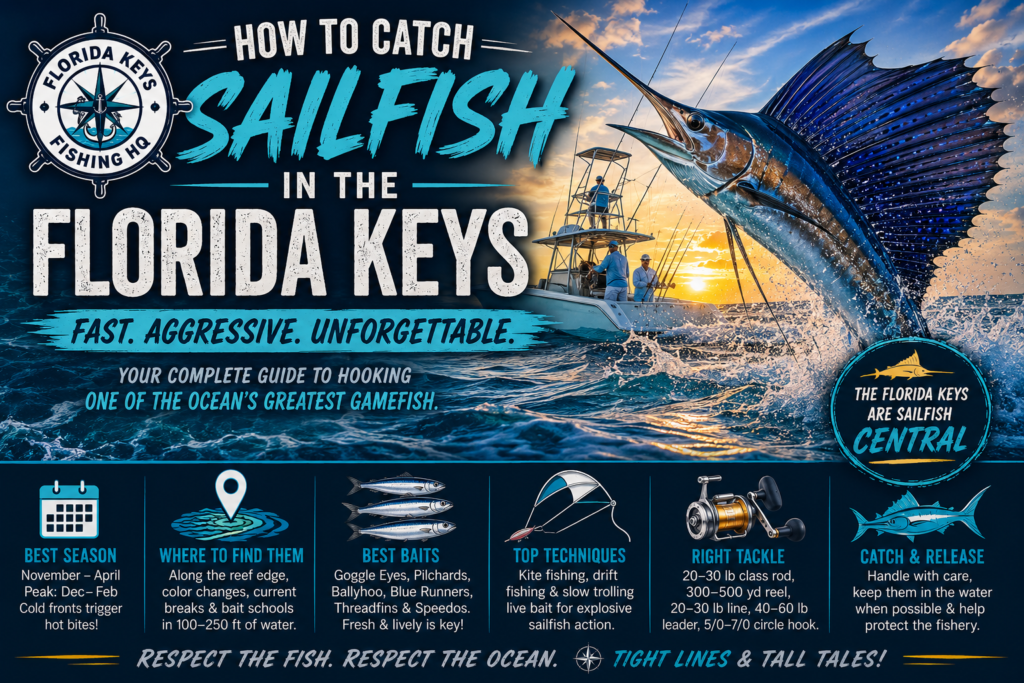
When Is the Best Time to Catch Sailfish in the Florida Keys?
The peak sailfish season runs from:
- November through April
- Prime months: December, January, and February
Cold fronts often trigger excellent sailfish action. Many experienced anglers plan trips immediately after a strong front passes through the Keys.
Where to Find Sailfish in the Florida Keys
Sailfish are typically found along the edge of the reef line and offshore waters where baitfish concentrate.
Popular areas include:
- Key Largo reef edge
- Islamorada reef line
- Marathon offshore reefs
- Upper Keys color changes
- Current edges along the Gulf Stream
Most sailfish are caught in:
- 100–250 feet of water
- Areas with strong current
- Locations holding schools of baitfish
Bird activity, bait schools, and color changes are all signs worth investigating.
Best Baits for Sailfish
Live bait consistently produces the most sailfish.
Top choices include:
- Goggle Eyes
- Pilchards
- Ballyhoo
- Blue Runners
- Threadfin Herring
- Speedos
Healthy, lively bait is often more important than bait size.
Best Sailfish Rigs
Kite Fishing
Kite fishing is widely considered the most effective sailfish technique in the Florida Keys.
Benefits include:
- Keeps bait near the surface
- Creates natural presentation
- Allows multiple baits to be fished simultaneously
- Produces spectacular visual strikes
Drift Fishing
Drifting live bait along the reef edge is another productive method.
This technique works especially well when:
- Winds are light
- Current is strong
- Bait schools are concentrated
Slow Trolling
Slow trolling live baits behind the boat can help cover more water when fish are scattered.
Recommended Tackle
A typical sailfish setup includes:
Rod
- 20–30 lb class conventional rod
Reel
- Lever drag conventional reel
- 300–500 yards of line capacity
Main Line
- 20–30 lb monofilament
- 30–50 lb braid
Leader
- 40–60 lb fluorocarbon leader
Hook
- 5/0–7/0 circle hook
Circle hooks improve hook-up rates and reduce injury to released fish.
How Sailfish Feed
Sailfish often use their bills to stun baitfish before eating them.
Signs of feeding activity include:
- Frigate birds diving
- Nervous bait schools
- Flying fish
- Surface explosions
When sailfish are actively feeding, action can be fast and exciting.
Fighting a Sailfish
Once hooked, sailfish are known for:
- High-speed runs
- Spectacular jumps
- Long fights
Maintain steady pressure and avoid excessive drag settings.
Most Florida Keys anglers release sailfish to help preserve this incredible fishery.
Tips for More Sailfish
- Fish after cold fronts.
- Focus on active bait schools.
- Watch for bird activity.
- Use fresh, lively bait.
- Stay mobile if fish are not showing.
- Pay attention to current breaks and color changes.
Small adjustments can make a huge difference during a sailfish bite.
Final Thoughts
Sailfish are one of the most exciting fish you can target in the Florida Keys. Their speed, acrobatics, and aggressive strikes create unforgettable experiences for anglers of all skill levels.