Category: Spearfishing

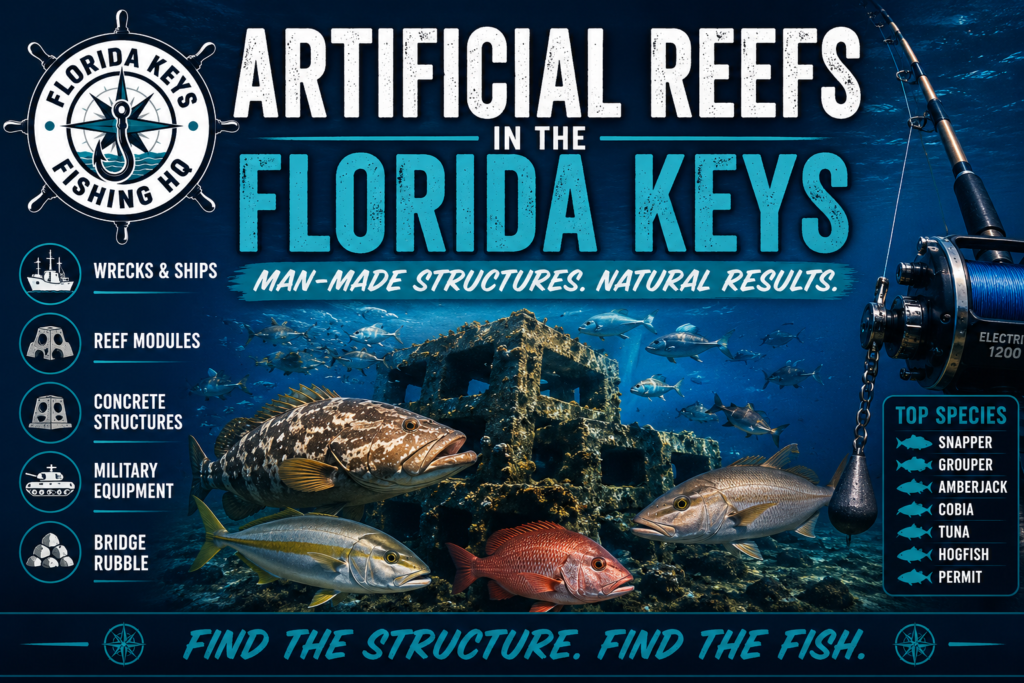
  • The Florida Keys are home to some of the most productive artificial reefs in the world. These man-made structures provide habitat for baitfish, snapper, grouper, amberjack, cobia, and countless other species.

    Whether you are fishing, diving, or spearfishing, understanding how artificial reefs work can help you locate fish and improve your success on the water.

    What Is an Artificial Reef?

    An artificial reef is a man-made structure intentionally placed on the ocean floor to create habitat for marine life.

    Common artificial reefs found in the Florida Keys include:

    • Ships and wrecks
    • Concrete structures
    • Bridge rubble
    • Military equipment
    • Reef modules
    • Large steel structures

    Over time these structures become covered with coral, sponges, algae, and marine growth, attracting baitfish and larger predators.
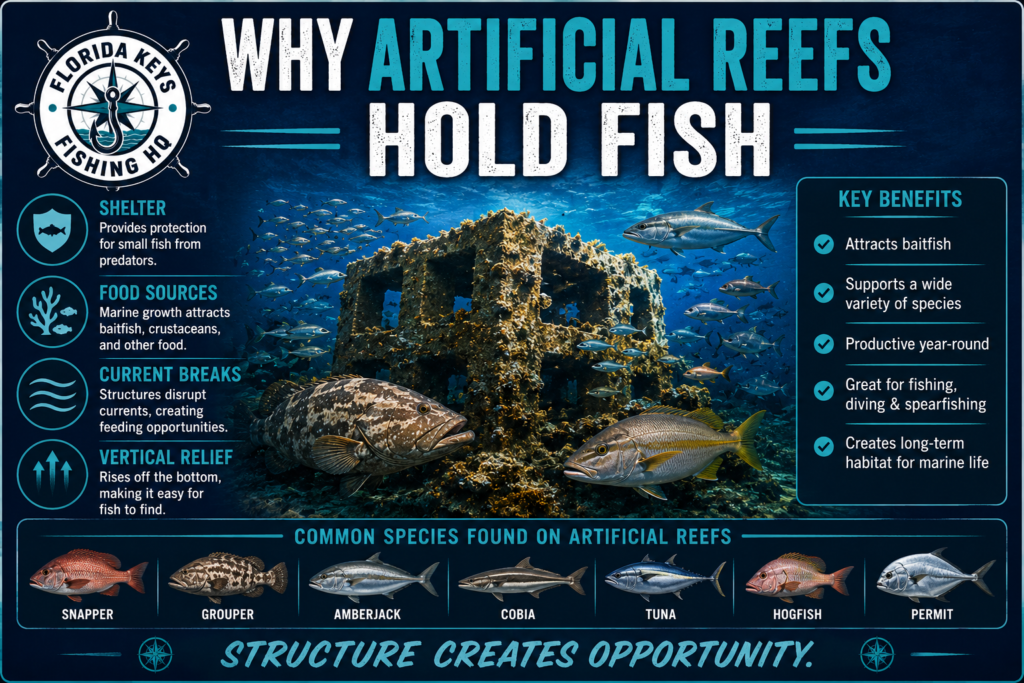
    Artificial reefs provide several important benefits:

    Shelter

    Small fish use the structure for protection from predators.

    Food Sources

    Marine growth attracts baitfish, crustaceans, and other food sources.

    Current Breaks

    Large structures disrupt ocean currents, creating feeding opportunities.

    Vertical Relief

    Many artificial reefs rise significantly off the bottom, making them easy for fish to locate.

    Popular Species Found on Artificial Reefs

    Artificial reefs throughout the Florida Keys commonly attract:

    • Mangrove Snapper
    • Yellowtail Snapper
    • Mutton Snapper
    • Gag Grouper
    • Black Grouper
    • Amberjack
    • Cobia
    • Permit
    • Barracuda
    • Kingfish
    • Blackfin Tuna
    • Hogfish

    Different species often use different parts of the structure.

    How to Find Artificial Reefs

    Modern electronics make finding artificial reefs easier than ever.

    Use Navionics

    Many artificial reefs appear directly on Navionics charts.

    Look for:

    • Wreck symbols
    • Reef markers
    • Artificial reef labels
    • Bottom irregularities

    Use Sonar

    When approaching a reef:

    • Reduce speed
    • Scan the area carefully
    • Look for bait schools
    • Look for fish suspended above the structure

    Many predators hold above the reef rather than directly on it.

    Best Techniques for Fishing Artificial Reefs

    Bottom Fishing

    Bottom fishing is one of the most productive methods.

    Popular targets include:

    • Mangrove Snapper
    • Grouper
    • Mutton Snapper

    Use live bait, cut bait, or knocker rigs near structure.

    Vertical Jigging

    Vertical jigs work extremely well around wrecks and reef systems.

    This technique is especially effective for:

    • Amberjack
    • Blackfin Tuna
    • Grouper

    Live Bait Fishing

    Live pilchards, pinfish, grunts, and blue runners often produce larger fish.

    Artificial Reefs and Spearfishing

    Many artificial reefs provide excellent spearfishing opportunities.

    Always verify local regulations before entering the water and ensure the reef is open to spearfishing.

    Common spearfishing targets include:

    • Mangrove Snapper
    • Hogfish
    • Grouper
    • Mutton Snapper

    Visibility and current conditions can vary significantly.

    Best Conditions for Artificial Reef Fishing

    Artificial reefs can produce year-round, but success often improves when:

    • Water clarity is good
    • Current is moving
    • Baitfish are present
    • Weather is stable

    Always spend time searching for bait before committing to a location.

    Final Thoughts

    Artificial reefs are among the most productive fishing structures in the Florida Keys. They attract bait, provide shelter, and consistently hold a wide variety of gamefish.

    By learning how to identify artificial reefs on your charts and understanding how fish use the structure, you can dramatically improve your fishing success throughout the Keys.

    Related Articles
  • Florida Keys Artificial Reef Guide (2026 Edition)

    The Florida Keys are home to some of the most productive artificial reefs in the world. These intentionally placed wrecks and structures attract baitfish, snapper, grouper, pelagic species, and countless other marine life.

    Whether you’re fishing, diving, snorkeling, or spearfishing where permitted, understanding the Florida Keys artificial reef system can dramatically improve your success on the water.

    Why Artificial Reefs Are So Productive

    Artificial reefs create structure where little or none previously existed.

    Over time these reefs become covered with coral, sponges, algae, and other marine growth. This attracts baitfish, which in turn attract larger predators such as:

    • Mangrove Snapper
    • Yellowtail Snapper
    • Mutton Snapper
    • Black Grouper
    • Gag Grouper
    • Cobia
    • Amberjack
    • Kingfish
    • Barracuda
    • Permit

    The larger the structure, the larger the ecosystem it can support.

    Spiegel Grove

    The Spiegel Grove is one of the most famous artificial reefs in the world.

    Location

    Key Largo

    Length

    Approximately 510 feet

    Depth

    65 to 130 feet

    Species Found

    • Black Grouper
    • Mutton Snapper
    • Mangrove Snapper
    • Amberjack
    • Cobia
    • Barracuda

    The massive size of the Spiegel Grove makes it one of the best places in the Florida Keys to locate structure-oriented species.

    USS Duane

    The Duane is another legendary Key Largo wreck.

    Depth

    Approximately 120 feet

    Species Found

    • Mutton Snapper
    • Black Grouper
    • Amberjack
    • Permit
    • Barracuda

    Strong currents frequently push bait across the wreck, creating excellent fishing opportunities.

    Eagle Wreck

    The Eagle Wreck is a favorite among divers and fishermen alike.

    Depth

    Approximately 110 feet

    Species Found

    • Mangrove Snapper
    • Yellowtail Snapper
    • Grouper
    • Permit
    • Cobia

    The Eagle often holds large schools of baitfish and can be extremely productive during seasonal migrations.

    Thunderbolt Wreck

    Located in the Middle Keys, the Thunderbolt is one of the most popular wrecks in Marathon.

    Depth

    Approximately 120 feet

    Species Found

    • Grouper
    • Snapper
    • Amberjack
    • Cobia

    The wreck sits upright and creates substantial relief from the surrounding seafloor.

    Adolphus Busch Senior

    Located offshore of Islamorada.

    Depth

    Approximately 110 feet

    Species Found

    • Mangrove Snapper
    • Mutton Snapper
    • Grouper
    • Amberjack

    This wreck frequently produces quality fish throughout the year.

    What To Look For Around Artificial Reefs

    The reef itself is not always where the fish are holding.

    Look for:

    • Current edges
    • Bait schools
    • Down-current structure
    • Sand-to-rock transitions
    • Nearby ledges
    • Bottom relief

    Many of the largest fish hold just off the wreck rather than directly on top of it.

    Fishing Artificial Reefs

    Artificial reefs can be productive using:

    Bottom Fishing

    • Live pinfish
    • Ballyhoo
    • Pilchards
    • Squid

    Vertical Jigging

    • Butterfly jigs
    • Speed jigs
    • Knife jigs

    Live Baiting

    • Blue runners
    • Pilchards
    • Goggle eyes

    Safety Considerations

    Always monitor:

    • Current strength
    • Boat traffic
    • Weather conditions
    • Fishing regulations
    • Protected zones

    Some artificial reefs are located in heavily trafficked areas and require careful boat positioning.

    Final Thoughts

    Florida Keys artificial reefs provide some of the best fishing opportunities in the state. From the Spiegel Grove in Key Largo to the Thunderbolt in Marathon, these structures attract baitfish and predators year-round.

    If you’re looking for consistent action, artificial reefs should be a regular part of your Florida Keys fishing strategy.

    Related Articles

  • Best Florida Keys Fishing Spots by Species (2026 Guide)

    The Florida Keys offer some of the best fishing opportunities in the world. From shallow-water mangrove snapper to deep-water snowy grouper and swordfish, knowing where each species lives can dramatically increase your success.

    This guide breaks down the best Florida Keys fishing spots by species and explains the types of structure, depths, and areas that consistently produce fish throughout the Keys.

    Mangrove Snapper

    Mangrove snapper can be found throughout the Florida Keys and are one of the most popular species for both boat and shore anglers.

    Best Areas

    • Bridges
    • Mangrove shorelines
    • Residential canals
    • Patch reefs
    • Artificial reefs

    Typical Depth

    • 5 to 120 feet

    What to Look For

    Current flow, structure, dock pilings, bridge pilings, and rocky bottom.

    Related Guide: Mangrove Snapper Fishing Guide (2026 Florida Keys Edition)

    Yellowtail Snapper

    Yellowtail snapper are commonly targeted along the reef tract and respond extremely well to a steady chum slick.

    Best Areas

    • Outer reef edge
    • Coral reefs
    • Patch reefs
    • Reef drop-offs

    Typical Depth

    • 20 to 120 feet

    What to Look For

    Clean water, current, and active chum lines.

    Related Guide: Yellowtail Snapper Fishing in the Florida Keys (2026 Guide)

    Mutton Snapper

    Mutton snapper are prized for their size and fighting ability.

    Best Areas

    • Offshore wrecks
    • Reef edges
    • Gravel bottoms
    • Hard-bottom areas

    Typical Depth

    • 50 to 250 feet

    What to Look For

    Structure near sandy areas and strong current.

    Black Grouper

    Black grouper prefer heavy structure and often stay close to reefs and wrecks.

    Best Areas

    • Natural reefs
    • Artificial reefs
    • Deep ledges
    • Shipwrecks

    Typical Depth

    • 40 to 300 feet

    What to Look For

    Large rocks, ledges, and reef systems.

    Related Guide: Black Grouper Fishing in the Florida Keys (2026 Guide)

    Gag Grouper

    Gag grouper are often found on deeper structure and rocky bottom.

    Best Areas

    • Offshore ledges
    • Deep reefs
    • Artificial reefs

    Typical Depth

    • 80 to 300 feet

    What to Look For

    Bottom relief and hard structure.

    Related Guide: Gag Grouper Fishing in the Florida Keys (2026 Guide)

    Snowy Grouper

    Snowy grouper are a favorite target for deep drop anglers fishing offshore from Key Largo and the Upper Keys.

    Best Areas

    • Deep contour edges
    • Offshore ledges
    • Bottom structure in deep water

    Typical Depth

    • 600 to 1,200 feet

    What to Look For

    Sharp contour changes, isolated bottom structure, and hard bottom.

    Related Guides:

    • How to Find Snowy Grouper in the Florida Keys (2026 Guide)
    • Best Snowy Grouper Rig Setup (2026 Guide)

    Queen Snapper

    Queen snapper inhabit deeper offshore waters and are commonly caught while deep dropping.

    Best Areas

    • Deep offshore structure
    • Bottom ledges
    • Steep drop-offs

    Typical Depth

    • 600 to 1,500 feet

    What to Look For

    Deep structure near contour changes.

    Related Guide: Queen Snapper Fishing in the Florida Keys (2026 Guide)

    Tilefish

    Tilefish live in deep offshore waters and are often targeted alongside snowy grouper and queen snapper.

    Best Areas

    • Mud bottoms
    • Deep contour lines
    • Offshore drop-offs

    Typical Depth

    • 600 to 1,500 feet

    What to Look For

    Soft bottom adjacent to structure.

    Related Guide: Tilefish Fishing in the Florida Keys (2026 Guide)

    Swordfish

    The Florida Keys are one of the best places in the world to target daytime swordfish.

    Best Areas

    • Gulf Stream edge
    • Deep offshore canyons
    • Steep drop-offs

    Typical Depth

    • 1,200 to 2,000 feet

    What to Look For

    Temperature breaks, current edges, and bottom contour changes.

    Related Guide: Swordfish Fishing in the Florida Keys (2026 Guide)

    Blackfin Tuna

    Blackfin tuna are highly migratory and often feed around current breaks and offshore structure.

    Best Areas

    • Offshore humps
    • Reef edge
    • Current rips

    Typical Depth

    • Surface to 300 feet

    What to Look For

    Bird activity, bait schools, and current lines.

    Related Guide: Blackfin Tuna Fishing in the Florida Keys (2026 Guide)

    Mahi-Mahi

    Mahi are one of the most exciting offshore species available in the Keys.

    Best Areas

    • Weed lines
    • Floating debris
    • Current edges

    Typical Depth

    • Surface waters offshore

    What to Look For

    Sargassum weed, birds, and floating structure.

    Related Guide: Mahi-Mahi Fishing in the Florida Keys (2026 Guide)

    Final Thoughts

    The best Florida Keys fishing spots depend on the species you are targeting. Whether you’re fishing bridges for mangrove snapper, reefs for yellowtail, or dropping in 1,000 feet of water for snowy grouper and queen snapper, understanding habitat and structure is the key to success.

    Before heading out, always review current regulations, weather conditions, and seasonal closures. With the right location and setup, the Florida Keys can provide world-class fishing opportunities year-round.

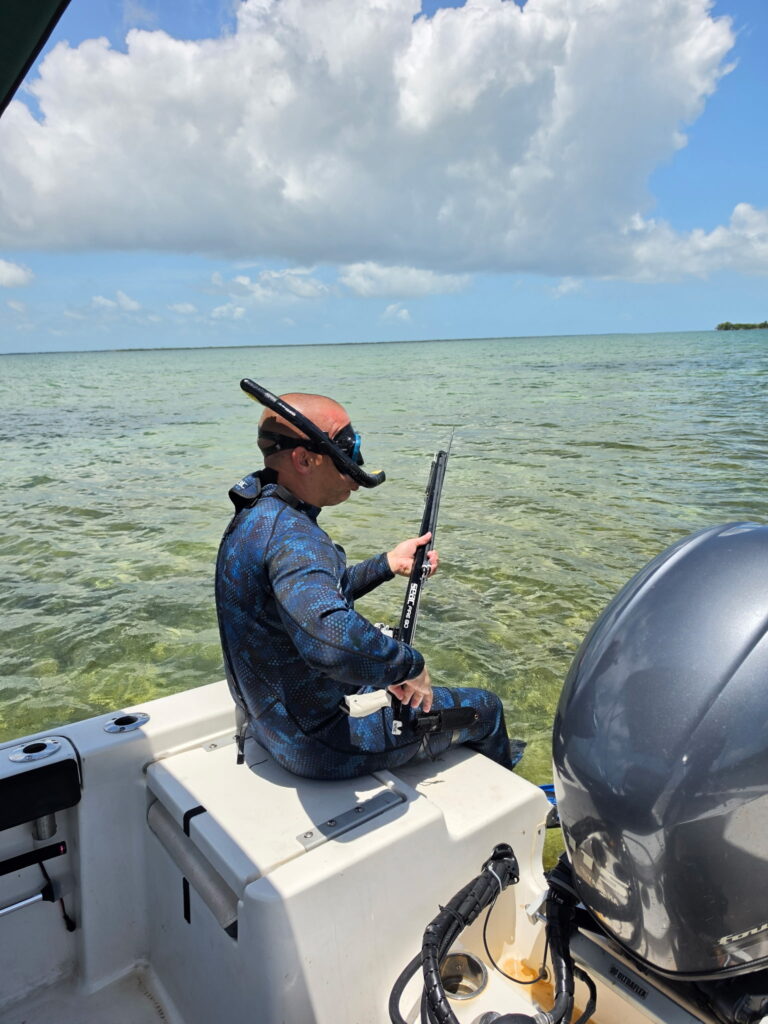
  • Spearfishing in the Florida Keys requires equipment that can handle everything from mangrove snapper on patch reefs to larger mutton snapper, hogfish, and grouper around deeper structure. Choosing the right speargun depends on your target species, water visibility, and diving style.

    This guide covers some of the most popular spearguns used by Florida Keys divers and what situations they are best suited for.

    What Length Speargun Is Best for the Florida Keys?

    Most Florida Keys divers prefer spearguns between 90cm and 120cm.

    General guidelines:

    • 90cm to 100cm for patch reefs and lower visibility conditions
    • 110cm to 120cm for clear water and longer shots
    • 130cm+ primarily for bluewater hunting

    For most divers, a 110cm speargun offers the best balance between range and maneuverability.

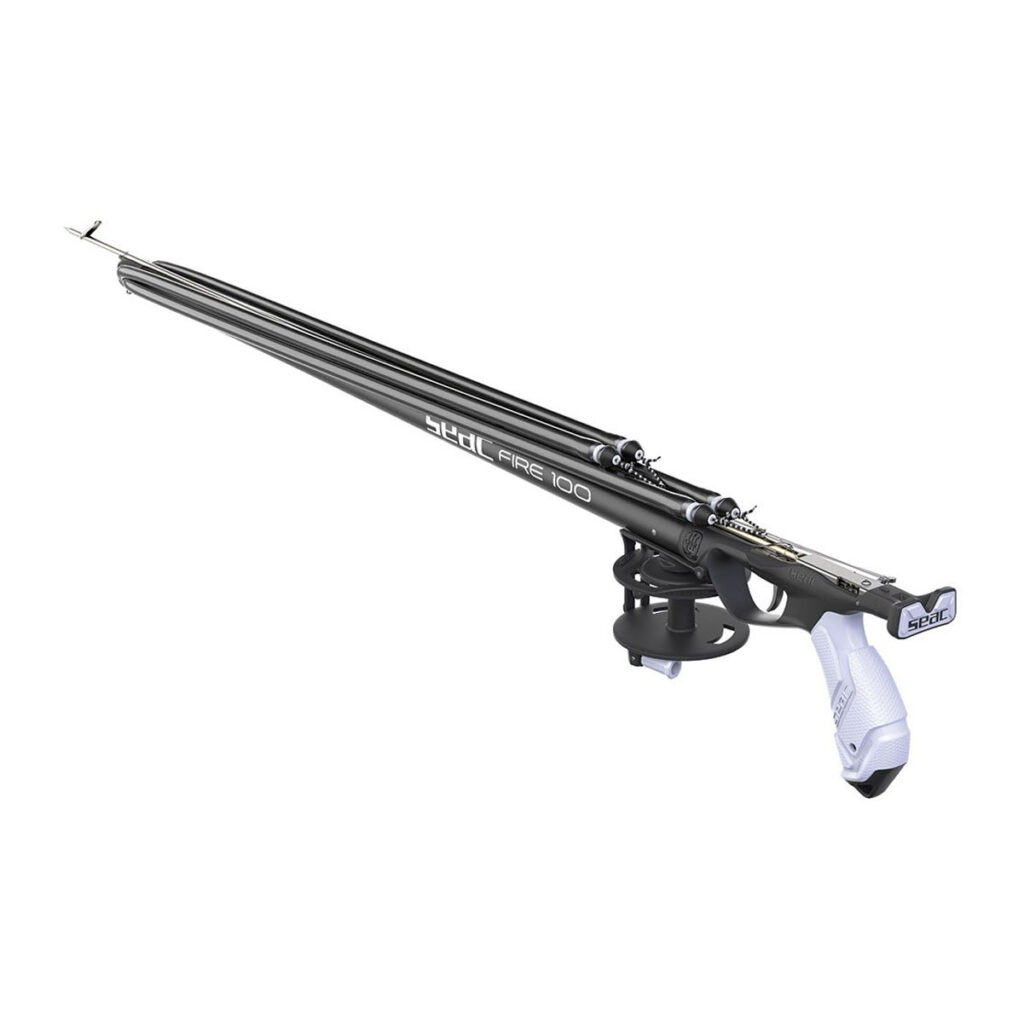
    Seac Fire Speargun

    The Seac Fire is a popular railgun that offers excellent accuracy and reliability for reef hunting.

    Pros

    • Lightweight design
    • Accurate rail barrel
    • Comfortable handle
    • Excellent value

    Best For

    • Hogfish
    • Mangrove snapper
    • Mutton snapper
    • Reef hunting

    Many Florida Keys divers appreciate the Seac Fire because it performs well without breaking the bank.

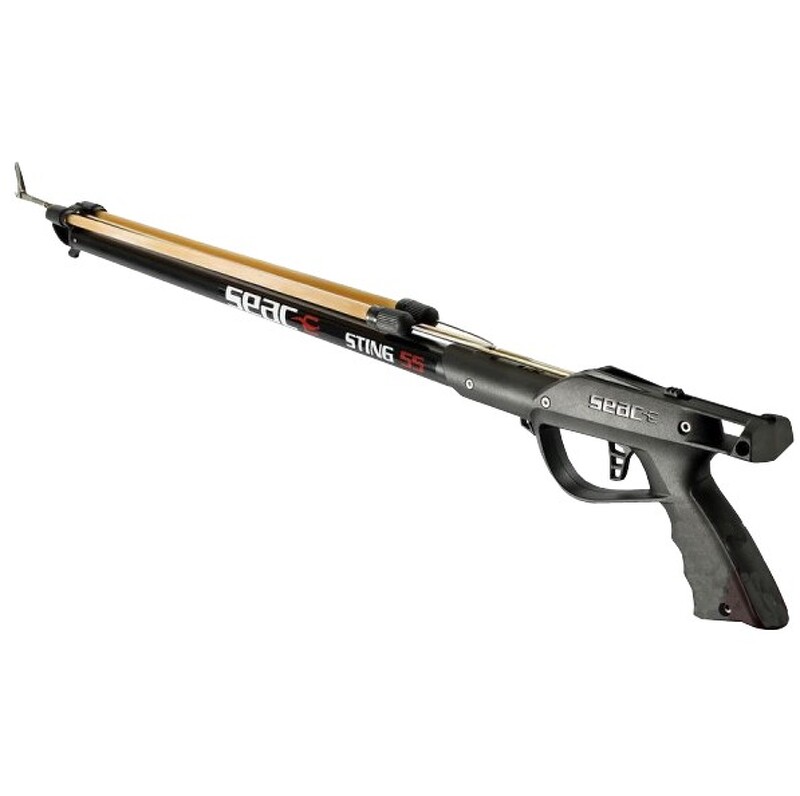
    Seac Sting Speargun

    The Seac Sting is another excellent option for divers who want a dependable reef gun.

    Pros

    • Easy to maneuver
    • Durable construction
    • Good entry-level option
    • Affordable pricing

    Best For

    • Beginners
    • Patch reef hunting
    • Smaller reef species

    For divers just getting started, the Sting is often an excellent first speargun.

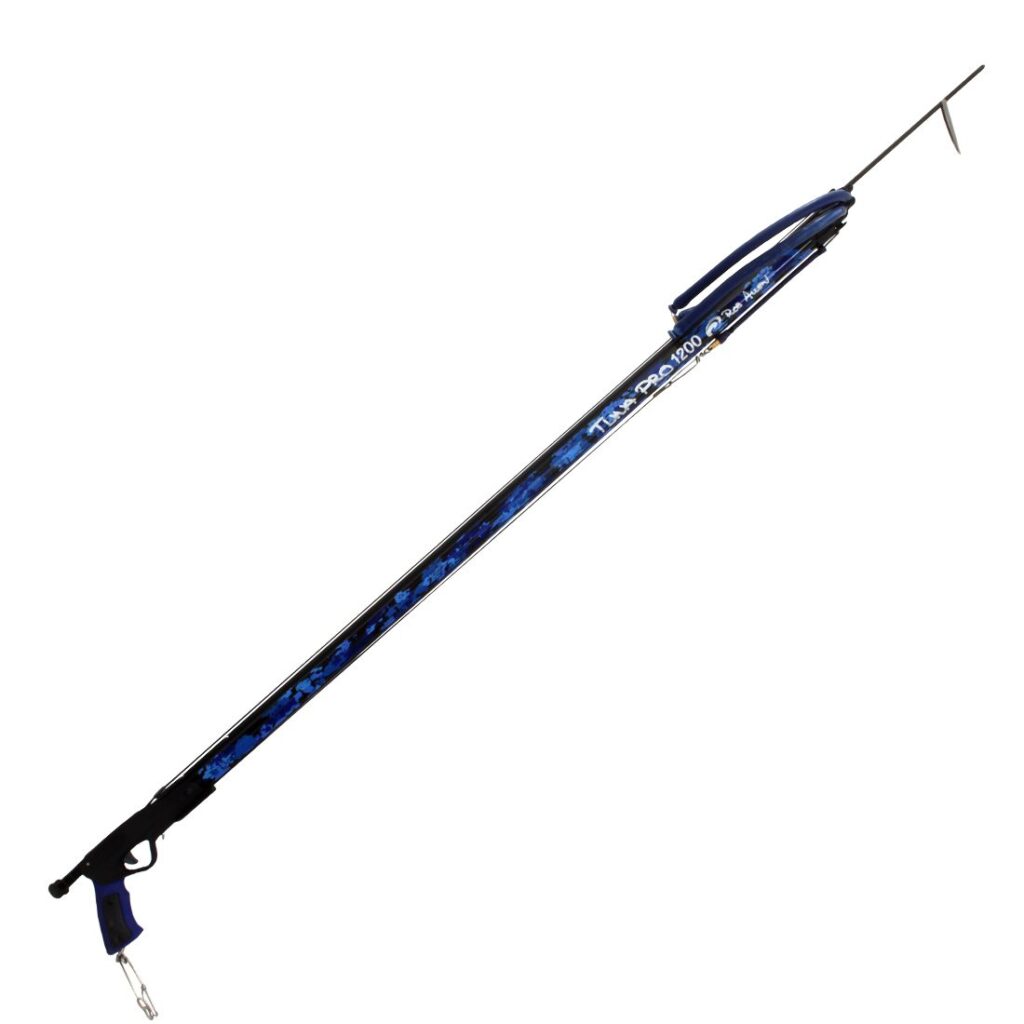
    Rob Allen Tuna Railgun

    The Rob Allen Tuna series has earned a reputation as one of the toughest spearguns available.

    Pros

    • Extremely durable
    • Excellent range
    • Reliable trigger mechanism
    • Strong aftermarket support

    Best For

    • Mutton snapper
    • Grouper
    • Larger reef fish

    Many experienced Florida Keys spearfishermen trust Rob Allen guns for demanding conditions.

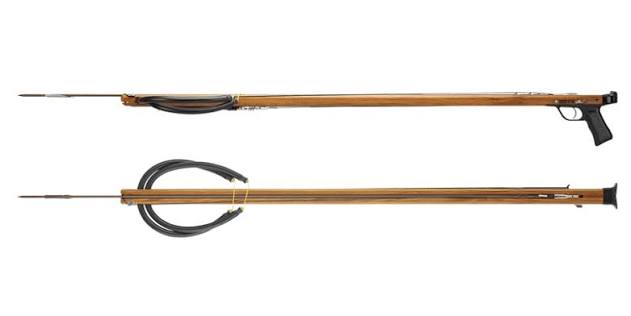
    Riffe Euro Series

    Riffe has long been respected among serious spearfishermen.

    Pros

    • Premium construction
    • Excellent accuracy
    • High-end components
    • Strong resale value

    Best For

    • Experienced divers
    • Larger fish
    • Clear water hunting

    The Riffe Euro Series performs exceptionally well in the clear waters commonly found throughout the Keys.

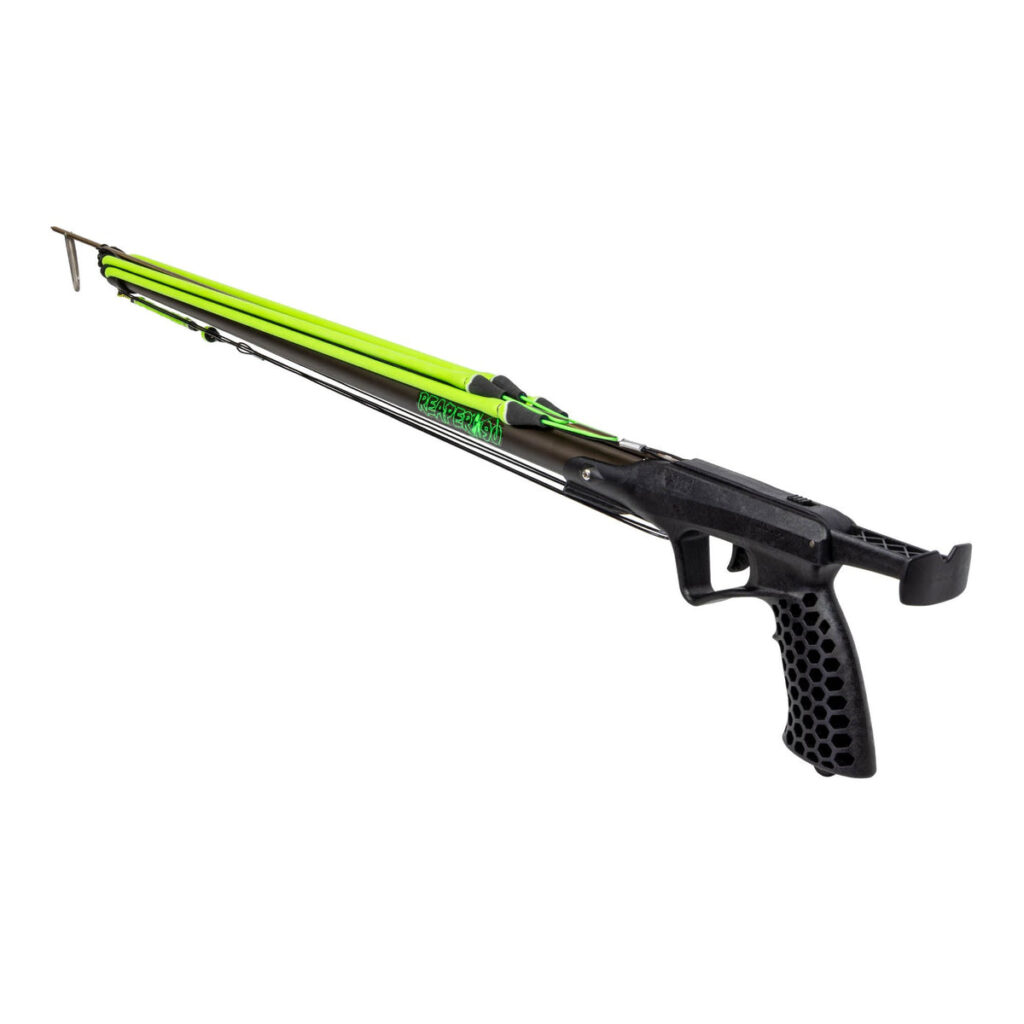
    JBL Reaper

    The JBL Reaper is a rugged speargun designed for divers targeting larger reef species.

    Pros

    • Powerful setup
    • Durable construction
    • Proven track record

    Best For

    • Grouper
    • Larger snapper
    • Reef structure hunting

    JBL remains a well-known name in the spearfishing community.

    Best Speargun for Beginners

    For most new divers, a 90cm to 100cm railgun offers the best combination of affordability, ease of use, and versatility.

    The Seac Sting is a strong choice for beginners because it is simple, dependable, and suitable for most reef species found in the Florida Keys.

    Best Speargun for Florida Keys Reef Fishing

    If you could only own one speargun for Florida Keys reef diving, a quality 110cm railgun is hard to beat.

    A 110cm gun provides enough range for clear-water conditions while remaining maneuverable around reefs and structure.

    Other Important Spearfishing Gear

    A quality speargun is only part of the setup.

    Essential equipment includes:

    • Dive mask
    • Fins
    • Weight belt
    • Float and flag
    • Gloves
    • Stringer
    • Dive knife

    Investing in quality gear improves both safety and success in the water.

    Final Thoughts

    The best speargun for Florida Keys spearfishing depends on your experience level and target species. For many divers, a 110cm railgun provides the perfect balance of range and maneuverability. Whether you choose a Seac, Rob Allen, Riffe, or JBL, the key is selecting a gun that matches the type of diving you do most often.

    With the right equipment and plenty of time in the water, Florida Keys divers can enjoy some of the best spearfishing opportunities found anywhere in the United States.

  • Introduction

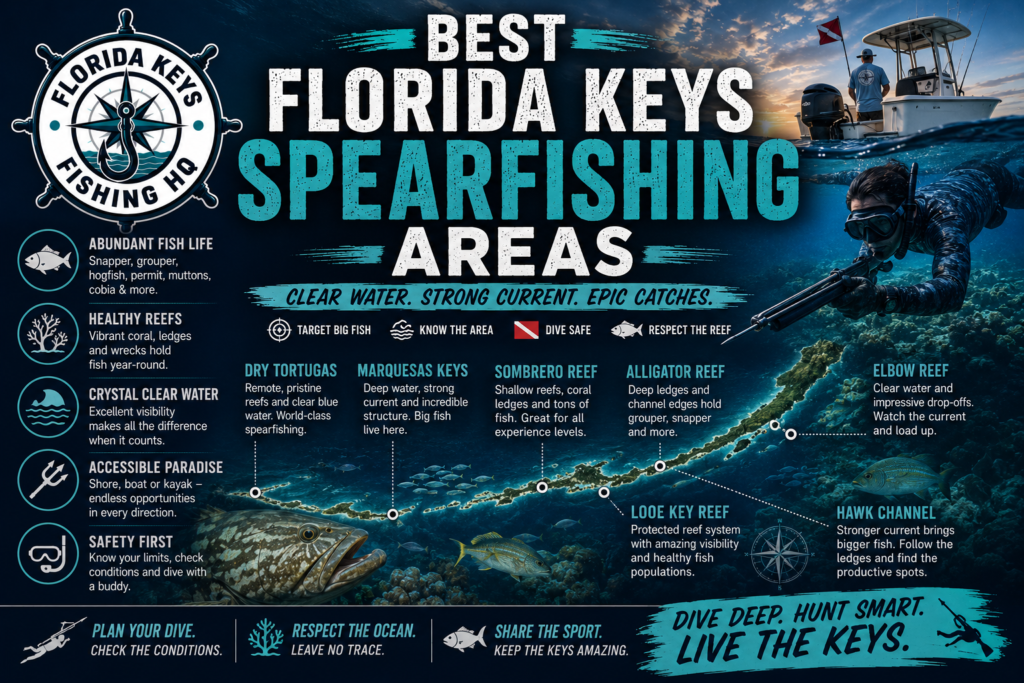
    The Florida Keys offer some of the best spearfishing opportunities in the United States. With miles of reef systems, patch reefs, wrecks, and offshore structure, divers can target a variety of species while enjoying clear water and abundant marine life.

    Before entering the water, it is important to understand local regulations, protected areas, and species restrictions. Many productive areas are open to spearfishing, while others are completely closed to harvest.

    Understanding Florida Keys Spearfishing Regulations

    One of the biggest mistakes new divers make is assuming that all reefs are open to spearfishing.

    Certain areas within marine sanctuaries, ecological reserves, and no-take zones prohibit spearfishing and harvesting marine life.

    Always verify current regulations before diving and carry updated charts whenever possible.

    Patch Reefs

    Patch reefs are among the most popular spearfishing locations in the Florida Keys.

    These isolated reef structures often hold:

    • Mangrove Snapper
    • Mutton Snapper
    • Hogfish
    • Grouper (when in season)
    • Yellow Jack

    Patch reefs are especially productive because they provide structure while often experiencing less fishing pressure than larger reef systems.

    Offshore Reefs

    The outer reef tract provides excellent opportunities for experienced divers.

    Depending on depth and regulations, divers may encounter:

    • Mutton Snapper
    • Mangrove Snapper
    • Yellowtail Snapper
    • Grouper
    • African Pompano

    Strong currents are common on offshore reefs, so proper planning and dive safety are essential.

    Gulf Side Spearfishing

    Many anglers focus exclusively on the Atlantic side, but the Gulf side can also provide productive spearfishing opportunities.

    Areas around mangrove shorelines and deeper channels may hold:

    • Mangrove Snapper
    • Sheepshead
    • Jack Crevalle
    • Various reef species

    Water clarity varies significantly depending on weather and tidal conditions.

    Wreck Diving Opportunities

    Artificial reefs and wrecks create habitat for a variety of fish species.

    Wrecks often attract:

    • Mangrove Snapper
    • Mutton Snapper
    • Amberjack
    • Cobia
    • Grouper

    Always verify local regulations before harvesting fish from any wreck site.

    Best Conditions for Spearfishing

    Successful spearfishing often depends on:

    • Good visibility
    • Moderate current
    • Calm seas
    • Proper tidal movement

    Many experienced divers prefer diving during periods of lighter current and favorable visibility.

    Safety Considerations

    Always prioritize safety while spearfishing.

    Recommended practices include:

    • Dive with a buddy
    • Display a dive flag
    • Monitor weather conditions
    • Maintain awareness of boat traffic
    • Know your location before entering the water

    Good planning can prevent dangerous situations and make for a more enjoyable day on the water.

    Species Commonly Targeted

    Popular legal species include:

    • Mangrove Snapper
    • Mutton Snapper
    • Hogfish
    • Grouper (when open)
    • Yellow Jack

    Always verify current size limits, bag limits, and seasonal closures before harvesting fish.

    Final Thoughts

    The Florida Keys offer outstanding spearfishing opportunities for both beginners and experienced divers. By understanding regulations, selecting productive structure, and practicing safe diving techniques, divers can enjoy some of the best underwater hunting available anywhere in the country.

    Whether targeting mangrove snapper on patch reefs or exploring deeper offshore structure, the Florida Keys provide endless opportunities for adventure beneath the surface.

    New to Florida Keys regulations? Read our Florida Keys Spearfishing Regulations Explained guide.

  • Introduction

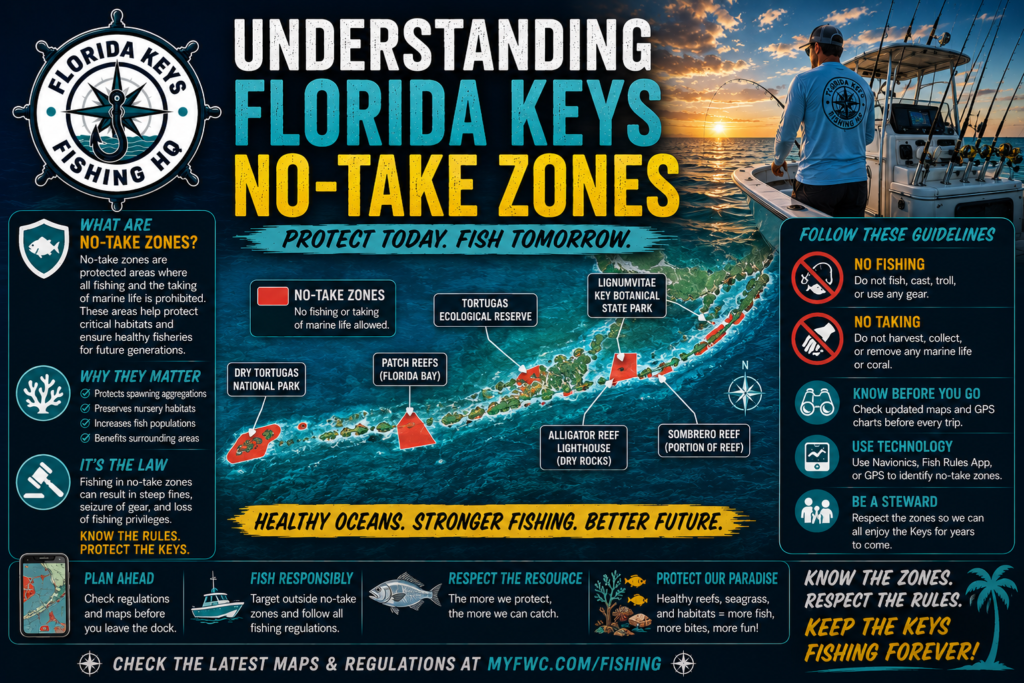
    No-take zones are among the most misunderstood areas in the Florida Keys.

    Many anglers and spearfishermen know they exist, but are unsure where they are located, what activities are prohibited, and how to identify them before entering the water.

    Understanding no-take zones is essential for protecting marine resources and avoiding costly violations.

    What Is a No-Take Zone?

    A no-take zone is an area where harvesting marine life is prohibited.

    Depending on the specific designation, restrictions may apply to:

    • Fishing
    • Spearfishing
    • Lobstering
    • Collecting marine life
    • Harvesting coral or other protected resources

    The purpose of these zones is to protect sensitive habitats and fish populations.

    Why Do No-Take Zones Exist?

    The Florida Keys contain some of the most unique marine ecosystems in the United States.

    No-take zones help:

    • Protect coral reefs
    • Preserve fish spawning areas
    • Support healthy fish populations
    • Improve long-term fishing opportunities

    These protected areas benefit both recreational anglers and future generations.

    Common Mistakes Anglers Make

    Many violations occur because boaters:

    • Do not verify boundaries before fishing
    • Rely on outdated information
    • Assume nearby waters are legal
    • Fail to review current regulations

    A few minutes of research before leaving the dock can prevent major problems.

    How To Identify No-Take Zones

    Before every trip, review:

    • Official sanctuary maps
    • Current regulations
    • GPS chartplotter information
    • Navigation apps such as Navionics

    Boundaries can change, so always verify current information.

    Frequently Asked Questions

    Can I fish inside a no-take zone?

    No. Harvesting marine life is prohibited.

    Can I spearfish inside a no-take zone?

    No. Spearfishing is prohibited.

    Can I anchor inside a no-take zone?

    Rules vary depending on the specific area. Always review current regulations.

    How do I know if I am inside a no-take zone?

    Use current maps, GPS equipment, and official resources before fishing or diving.

    Final Thoughts

    The Florida Keys provide incredible fishing and diving opportunities, but anglers and divers must understand protected areas before entering the water.

    Taking time to learn no-take zone boundaries will help protect marine resources and ensure your trip remains safe and legal.

  • Introduction

    One of the most common questions visitors ask before a Florida Keys spearfishing trip is simple:

    “Where can I legally spearfish?”

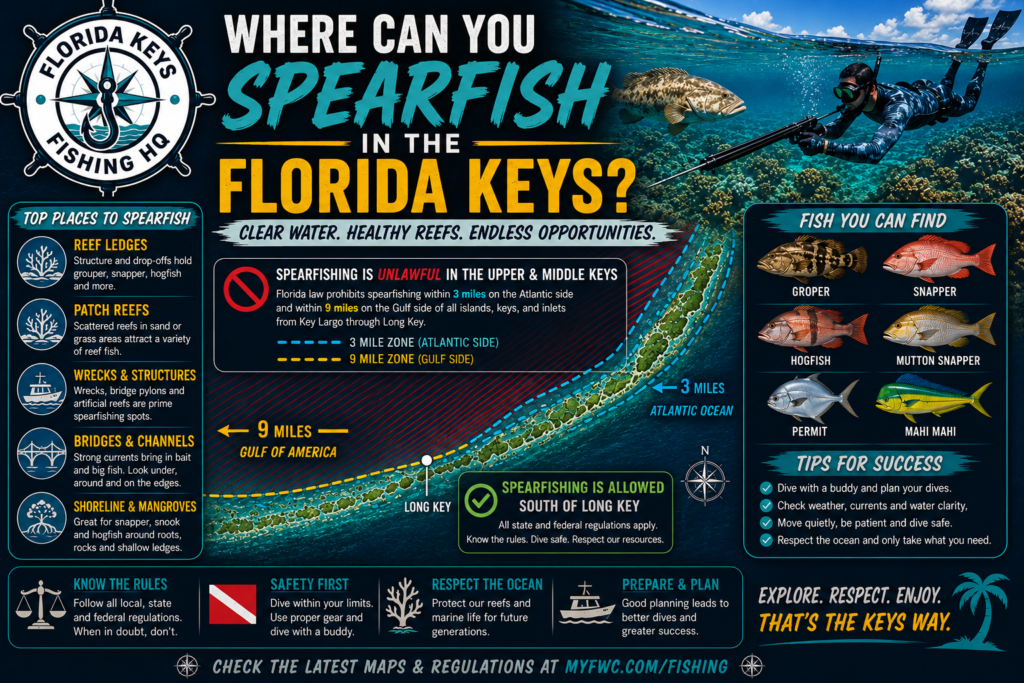
    In the Upper and Middle Keys, from Key Largo south through Long Key, spearfishing is generally prohibited within 3 miles of shore on the Atlantic Ocean side and within 9 miles of shore on the Gulf of America side. These restrictions include many islands, keys, and inlets throughout the region.

    Spearfishing opportunities become much more available south of Long Key, where many offshore reefs, ledges, and patch reefs are open to spearfishing, provided they are not located within a no-take zone, sanctuary preservation area, wildlife management area, or other protected zone.

    Before every trip, anglers and divers should verify current regulations using official NOAA Sanctuary maps and Florida Fish and Wildlife Conservation Commission (FWC) resources, as additional closures and protected areas may apply.

    When in doubt, check the regulations first. A few minutes of research can prevent costly violations and help protect the Florida Keys fishery for future generations.

    The Florida Keys contain numerous protected areas, sanctuary preservation areas, ecological reserves, state parks, and no-take zones.

    Additional Spearfishing Restrictions

    Even in areas where spearfishing is generally legal, several additional restrictions apply throughout Florida and the Florida Keys.

    Beaches, Piers, and Bridges

    Spearfishing is prohibited:

    • Within 100 yards of a public swimming beach.
    • Within 100 yards of any commercial or public fishing pier.
    • Within 100 yards of any portion of a bridge where public fishing is allowed.

    Jetties

    Spearfishing is prohibited within 100 feet of any part of a jetty that extends above the surface of the water.

    An exception exists for the last 500 yards of a jetty that extends more than 1,500 yards from shore, where spearfishing may be allowed if all other regulations are followed.

    Understanding where you can and cannot spearfish is essential before entering the water.

    Why So Many People Get Confused

    Many anglers assume that if they are offshore, they can legally spearfish.

    However, certain areas throughout the Florida Keys prohibit spearfishing regardless of distance from shore.

    Protected areas may include:

    • Sanctuary Preservation Areas
    • Ecological Reserves
    • State Parks
    • Research Areas
    • Existing No-Take Zones

    Always verify current regulations before entering the water.

    Areas to Research Before Every Trip

    Before launching your boat, confirm:

    • Current sanctuary boundaries
    • No-take zones
    • State park restrictions
    • Seasonal closures
    • Species regulations

    Taking a few minutes to verify boundaries can prevent costly mistakes.

    Tools That Help

    Several tools can help identify boundaries and protected areas:

    • Official sanctuary maps
    • GPS chartplotters
    • Navionics
    • State and federal agency websites

    Never rely solely on memory when planning a trip.

    Common Questions

    Can I spearfish near mangrove islands?

    It depends on the specific location and whether the area falls within a protected zone.

    Can I spearfish near bridges?

    Certain bridges and nearby waters may have restrictions. Always verify local regulations.

    Can I spearfish in state parks?

    Many state parks prohibit spearfishing.

    Can I spearfish inside no-take zones?

    No. Harvesting marine life is prohibited in no-take zones.

    Final Thoughts

    The Florida Keys offer outstanding spearfishing opportunities, but understanding legal boundaries is critical.

    Before every trip, verify current regulations and protected areas to ensure a safe and legal dive.