Category: Uncategorized

  • The Florida Keys are one of the most popular destinations in the world for recreational lobster diving. Every year, thousands of divers and snorkelers head to the Keys in search of Florida spiny lobster hiding beneath coral heads, ledges, bridges, and patch reefs.

    Whether you’re participating in mini-season or the regular lobster season, understanding where lobster live and how to catch them legally can greatly improve your success.

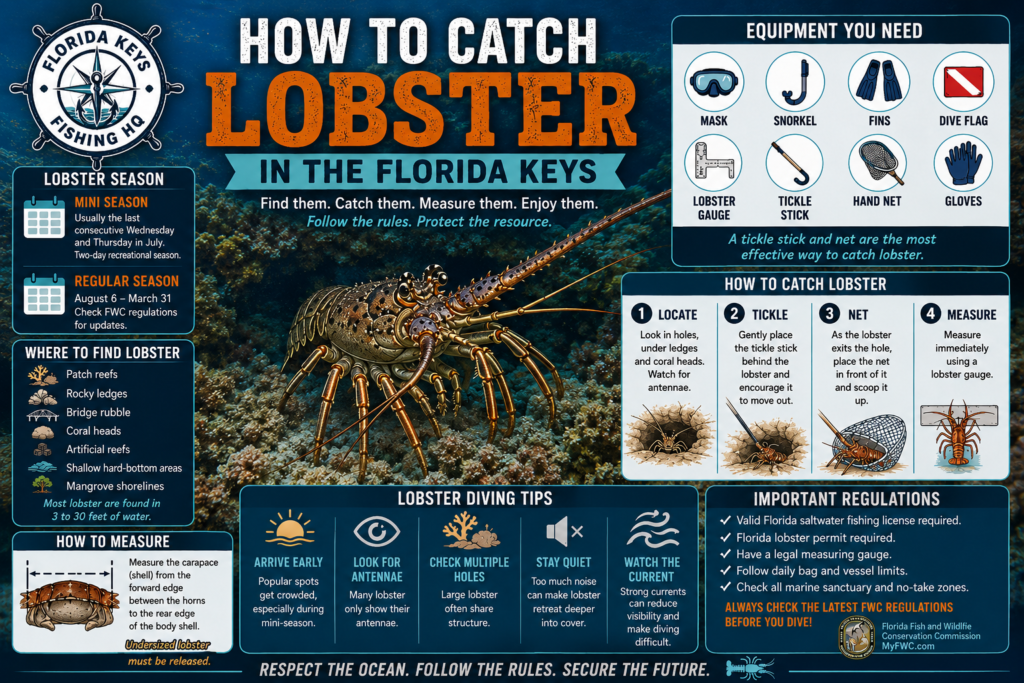
    When Is Lobster Season in the Florida Keys?

    Florida offers two lobster seasons:

    Mini Season

    The Florida Keys mini-season is a special two-day recreational season held each summer, usually during the last consecutive Wednesday and Thursday of July.

    Mini-season allows recreational divers to harvest lobster before the regular season opens.

    Regular Season

    The regular lobster season runs from August 6 through March 31.

    Always check current FWC regulations before your trip, as dates and regulations can change.

    Where to Find Lobster

    Spiny lobster prefer structure that provides protection during the day.

    Common locations include:

    • Patch reefs
    • Rocky ledges
    • Bridge rubble
    • Coral heads
    • Artificial reefs
    • Shallow hard-bottom areas
    • Mangrove shorelines

    Most recreational lobster in the Florida Keys are found in water ranging from 3 to 30 feet deep.

    During the day, lobster typically hide in holes and under ledges.

    What Equipment Do You Need?

    Basic lobster gear includes:

    • Mask
    • Snorkel
    • Fins
    • Dive flag
    • Lobster gauge
    • Tickle stick
    • Hand net
    • Gloves
    • Measuring device

    A tickle stick and net combination is one of the most effective methods for catching lobster.

    How to Catch Lobster

    Step 1: Locate the Lobster

    Look underneath ledges, coral heads, and rocks.

    Signs of lobster include:

    • Long antennae sticking out of holes
    • Multiple lobster stacked together
    • Fresh tracks in the sand

    Step 2: Use a Tickle Stick

    Gently place the tickle stick behind the lobster.

    Slowly encourage the lobster to move forward out of its hiding spot.

    Step 3: Net the Lobster

    As the lobster exits the hole, position the net in front of it.

    Lobster naturally move backward, so guide it into the net and secure it.

    Step 4: Measure Immediately
    Every lobster must be measured before being placed in your catch bag.

    Never assume a lobster is legal without measuring it.

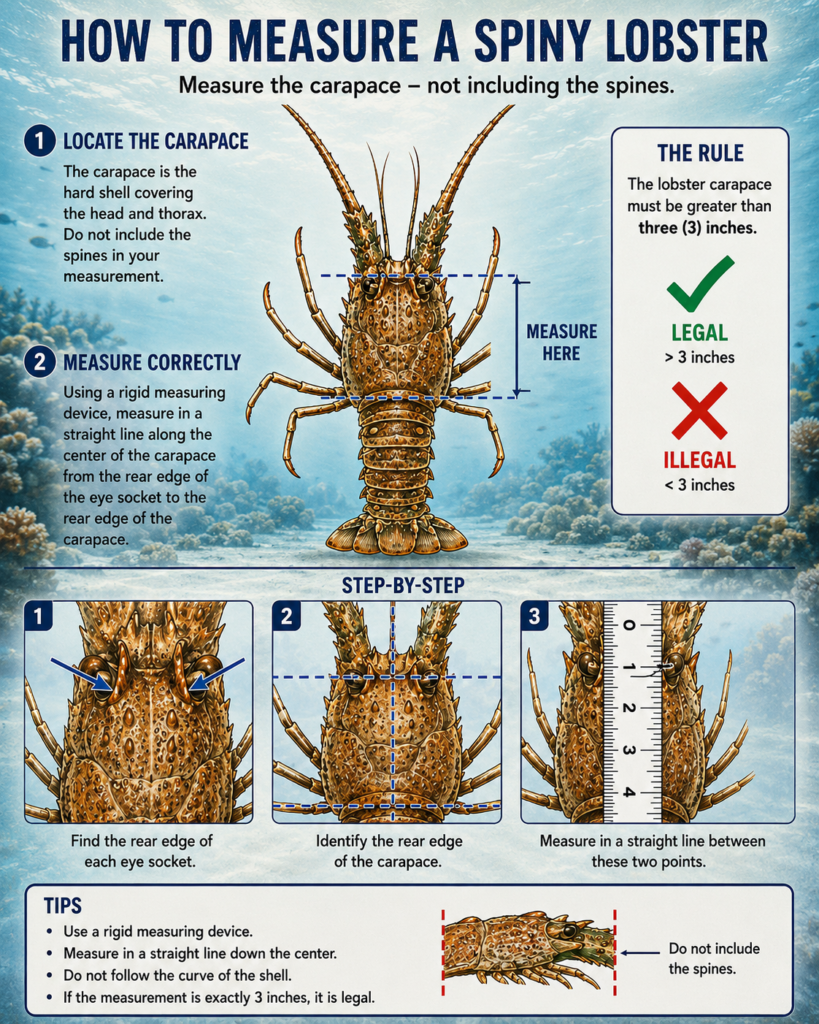
    How to Measure a Florida Spiny Lobster

    Florida regulations require lobster to meet a minimum carapace length.

    Measure from:

    • The forward edge between the horns
    • To the rear edge of the body shell

    A lobster gauge is required while harvesting.

    Undersized lobster must be released immediately.

    Lobster Diving Tips

    Arrive Early

    Popular areas receive heavy pressure, especially during mini-season.

    Look for Antennae

    Many lobster remain completely hidden except for their antennae.

    Check Multiple Holes

    Large lobster often share structure with several smaller lobster.

    Stay Quiet

    Excessive splashing and noise can cause lobster to retreat deeper into cover.

    Watch the Current

    Strong currents can make diving difficult and reduce visibility.

    Florida Keys Lobster Regulations

    Regulations can change, but some important rules include:

    • Possess a valid Florida saltwater fishing license if required.
    • Possess a Florida lobster permit if required.
    • Carry a legal measuring gauge.
    • Follow daily bag limits.
    • Follow vessel limits where applicable.
    • Respect all marine sanctuary and no-take zones.

    Always review the latest Florida Fish and Wildlife Conservation Commission (FWC) regulations before harvesting lobster.

    Common Mistakes

    Grabbing Before Measuring

    Always measure first.

    Ignoring Sanctuary Boundaries

    Many protected areas in the Florida Keys prohibit lobster harvesting.

    Diving Without a Flag

    A dive flag is required and significantly improves safety.

    Focusing Only on Reefs

    Some of the best lobster habitat is found along shallow ledges and hard-bottom areas.

    Final Thoughts

    Catching lobster in the Florida Keys is one of the most exciting outdoor activities available in South Florida. With the right equipment, a basic understanding of lobster behavior, and knowledge of current regulations, even beginners can enjoy a successful day on the water.

    Take your time, measure every lobster carefully, respect protected areas, and you’ll be well on your way to enjoying one of the Keys’ most popular traditions.
  • Introduction

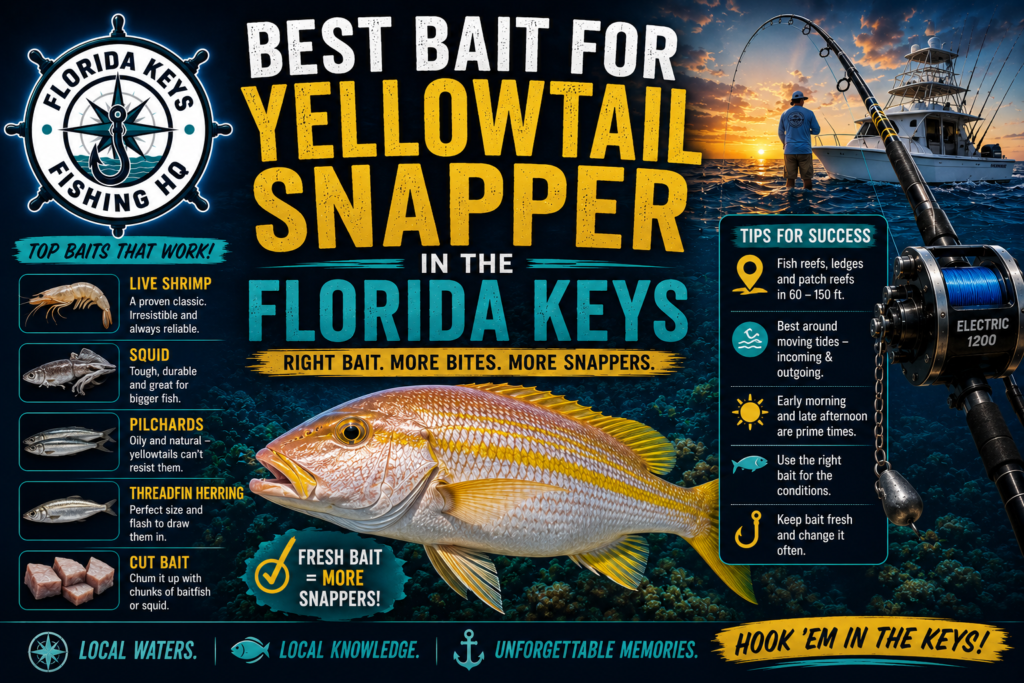
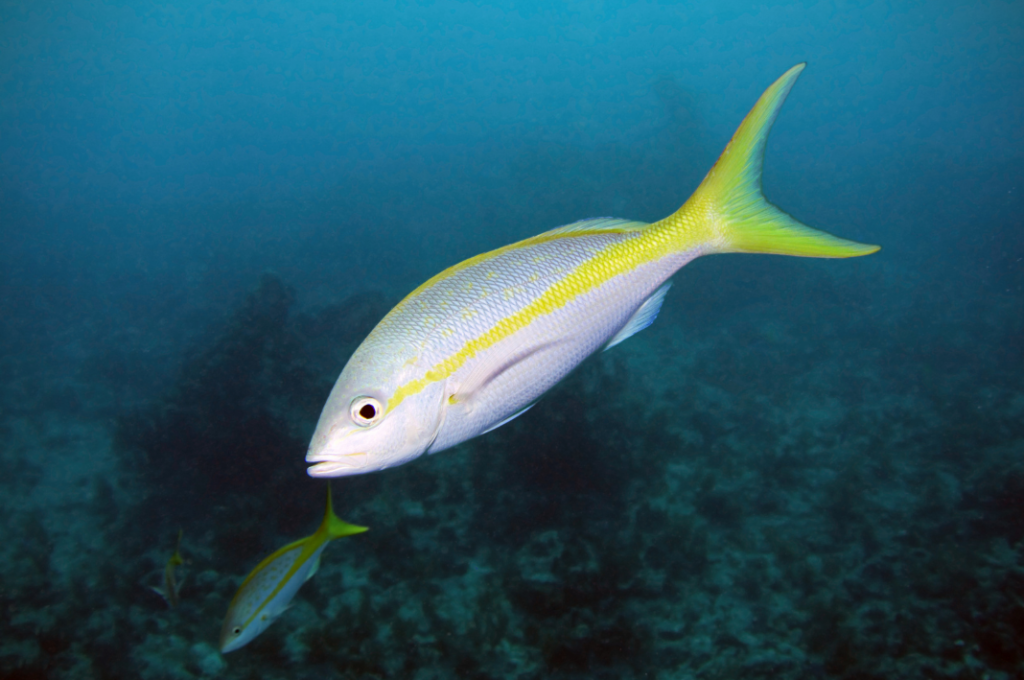
    Yellowtail snapper are one of the most popular reef fish in the Florida Keys. They provide excellent table fare, fight hard on light tackle, and can be caught throughout much of the year.

    Success often comes down to using the right bait and creating an effective chum slick that draws fish behind the boat.

    Why Bait Matters

    Yellowtail snapper are visual feeders that spend much of their time suspended in the water column.

    Unlike mangrove snapper, yellowtails often move away from structure to investigate chum and drifting bait presentations.

    Choosing the proper bait can significantly increase the number and size of fish caught.

    Fresh Shrimp

    Fresh shrimp is one of the most effective yellowtail snapper baits available.

    Benefits include:

    • Easy to obtain
    • Natural scent
    • Excellent hook presentation
    • Effective year-round

    Many anglers use small pieces rather than entire shrimp to match the size of chum being introduced into the water.

    Ballyhoo

    Small chunks of ballyhoo are extremely popular among Florida Keys anglers.

    Ballyhoo:

    • Stays on the hook well
    • Produces a strong scent trail
    • Matches local forage
    • Works well in deeper water

    Fresh ballyhoo often outperforms frozen bait when available.

    Cut Bonita

    Bonita is frequently used for both chum and hook bait.

    The oily flesh creates a strong scent trail that can attract yellowtail snapper from long distances.

    Small strips or chunks can be highly effective when drifted naturally in the chum slick.

    Pilchards

    Live or freshly cut pilchards are another excellent option.

    Pilchards are common throughout the Keys and are a natural food source for many reef species.

    When available, they can produce outstanding results.

    The Importance of Chumming

    Many experienced yellowtail anglers believe chum is more important than the bait itself.

    A consistent chum slick:

    • Draws fish toward the boat
    • Keeps fish feeding
    • Creates competition among snapper
    • Increases bite frequency

    Frozen chum blocks are commonly used throughout the Florida Keys reef fishery.

    Best Hook and Leader Setup

    For yellowtail snapper:

    • Small circle hooks
    • 10–20 lb fluorocarbon leaders
    • Light spinning tackle

    Lighter leaders often produce more bites in clear water conditions.

    Common Mistakes

    Common yellowtail mistakes include:

    • Using oversized hooks
    • Fishing heavy leaders
    • Not using enough chum
    • Dropping bait too quickly
    • Ignoring current direction

    Presentation is often more important than expensive tackle.

    Final Thoughts

    The best bait for yellowtail snapper in the Florida Keys often includes fresh shrimp, ballyhoo, pilchards, and bonita. Combined with a strong chum slick and light tackle, these baits can produce excellent action on reefs throughout the Keys.

    Whether you’re fishing patch reefs or offshore reef structure, using natural bait and proper presentation will consistently put more yellowtail snapper in the cooler.

    Looking for another popular snapper species? Check out our Mangrove Snapper Fishing Guide (2026 Florida Keys Edition).

    Learn when different species are most active in our Florida Keys Fishing Seasons Guide (2026).

  • Introduction

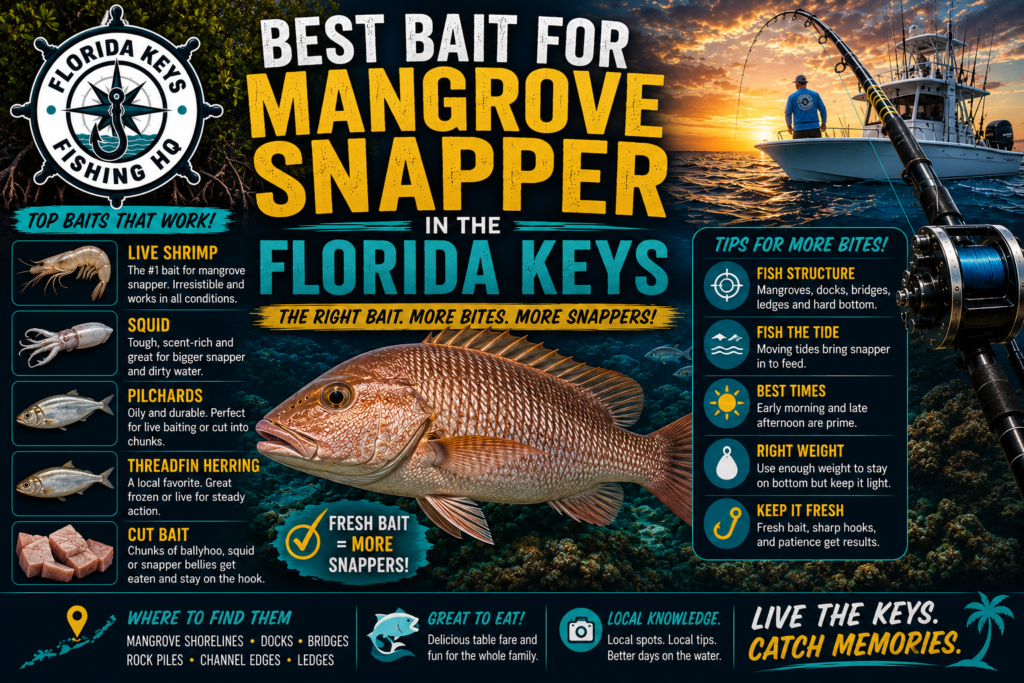
    Mangrove snapper are one of the most popular fish species in the Florida Keys. They can be found around bridges, mangroves, patch reefs, wrecks, and offshore structure. While mangrove snapper will eat a variety of baits, some options consistently outperform others. Choosing the right bait can make the difference between a slow day and a full cooler.

    Live Shrimp

    Live shrimp are one of the most effective baits for mangrove snapper. Their natural movement and scent attract fish in both shallow and deep water. Shrimp work particularly well around bridge pilings, mangrove shorelines, and patch reefs where snapper naturally feed. Hook the shrimp lightly through the horn to keep it alive and active.

    Pilchards

    Pilchards are a favorite bait among experienced Florida Keys anglers. These small baitfish are commonly found throughout the Keys and closely match the natural forage that mangrove snapper feed on every day. Free-lining a live pilchard around structure can produce aggressive strikes from larger snapper.

    Pinfish

    Pinfish are another excellent bait choice, especially when targeting larger mangrove snapper. Their durability allows them to stay alive longer in strong current and around structure. Many anglers use small live pinfish near bridge pilings and reef edges where trophy-sized snapper are often found.

    Ballyhoo

    Ballyhoo are commonly used throughout the Florida Keys for a variety of species, including mangrove snapper. Small live or freshly cut pieces of ballyhoo provide excellent scent and visibility in the water. They are especially productive around offshore reefs and wrecks.

    Cut Bait

    Fresh cut bait can be extremely effective when mangrove snapper are feeding aggressively. Cut pinfish, ballyhoo, sardines, and other local baitfish release scent into the water and attract fish from a distance. Smaller chunks often work best because snapper can easily consume them.

    Best Rig for Mangrove Snapper

    A simple fluorocarbon leader with a small circle hook is often all that is needed for mangrove snapper. In shallow water, many anglers prefer to free-line live bait naturally with the current. In deeper water or stronger current, adding a small weight helps keep the bait in the strike zone.

    Best Locations in the Florida Keys

    Mangrove snapper can be found throughout the Florida Keys. Productive areas include bridge pilings, mangrove shorelines, patch reefs, wrecks, and offshore reefs. Fish are often concentrated around structure where they can ambush bait carried by the current.

    Final Thoughts

    Mangrove snapper are abundant throughout the Florida Keys and provide excellent fishing opportunities year-round. Live shrimp, pilchards, pinfish, ballyhoo, and fresh cut bait are among the most productive options available. Matching the local forage and fishing around structure will greatly improve your chances of success.