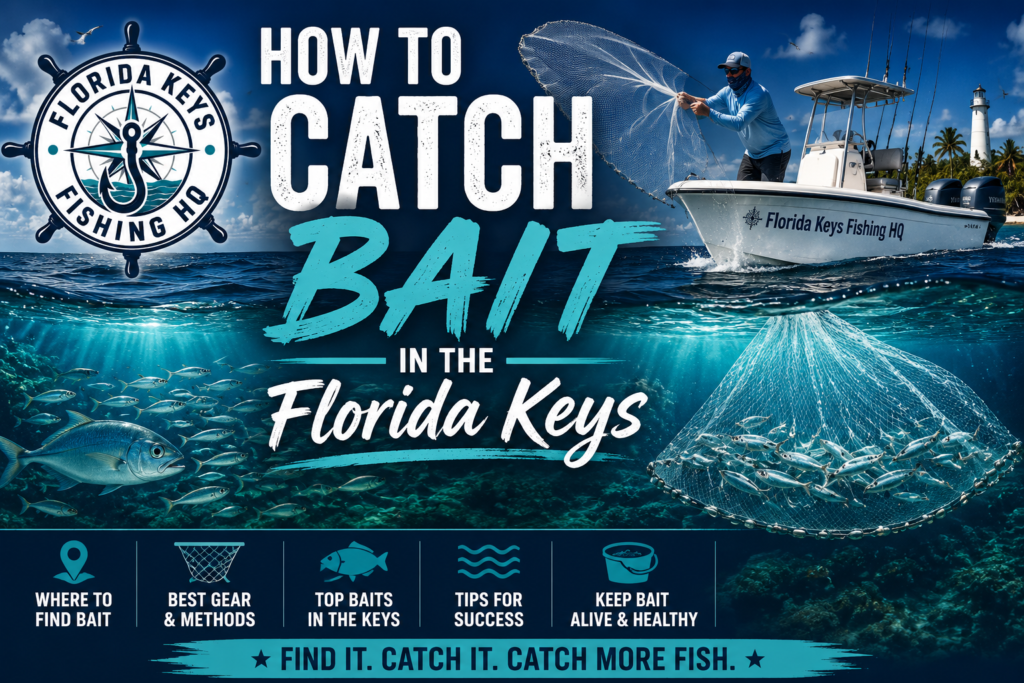
Finding live bait is one of the most important parts of a successful fishing trip in the Florida Keys. Whether you’re targeting mangrove snapper, yellowtail snapper, grouper, sailfish, mahi, tuna, or kingfish, fresh live bait consistently outfishes frozen bait.
Knowing where bait gathers, when to catch it, and what equipment to use can dramatically improve your success on the water.
Best Types of Live Bait in the Florida Keys
The most popular live baits include:
- Pilchards (Whitebait)
- Ballyhoo
- Threadfin Herring
- Goggle Eyes
- Blue Runners (Hardtails)
- Pinfish
- Speedos (Redtail Scad)
- Ballyhoo
Each species is effective for different types of fishing.
Where to Find Live Bait
Live bait is usually found anywhere baitfish have food and protection.
Look around:
- Patch reefs
- Shallow grass flats
- Sandy basins
- Channel markers
- Bridges
- Marinas
- Harbor entrances
- Gulf-side flats
- Reef edges
Bait often schools over light-colored sand near structure where predators are less likely to ambush them.
Finding Pilchards
Pilchards are one of the most popular live baits in the Keys.
Look for them:
- Early in the morning
- Over shallow grass flats
- Around patch reefs
- Near channel markers
- Around bridges
- In calm water with good visibility
Birds diving and nervous water are often signs of schooling pilchards.
Finding Ballyhoo
Ballyhoo are commonly found:
- Along reef edges
- Over patch reefs
- Around weed lines
- In 10–40 feet of water
Chumming with small pieces of oats or commercial chum can often bring schools within cast-net range.
Finding Threadfin Herring
Threadfins typically gather:
- Around bridges
- At channel markers
- Around bait schools
- Near deeper channels
They often show well on sonar as dense schools suspended in the water column.
Finding Blue Runners
Blue runners usually hold:
- Around offshore wrecks
- Buoys
- Artificial reefs
- Navigation markers
They can often be caught using small jigs or Sabiki rigs.
Finding Pinfish
Pinfish are abundant around:
- Seagrass flats
- Docks
- Marinas
- Mangroves
- Shallow hard-bottom areas
A small Sabiki rig tipped with shrimp is one of the easiest ways to catch them.
Best Equipment for Catching Bait
Most anglers carry:
- Cast net
- Sabiki rigs
- Small jig heads
- Chum bag
- Live well
- Aerator
- Polarized sunglasses
Each tool has its place depending on the bait species you’re targeting.
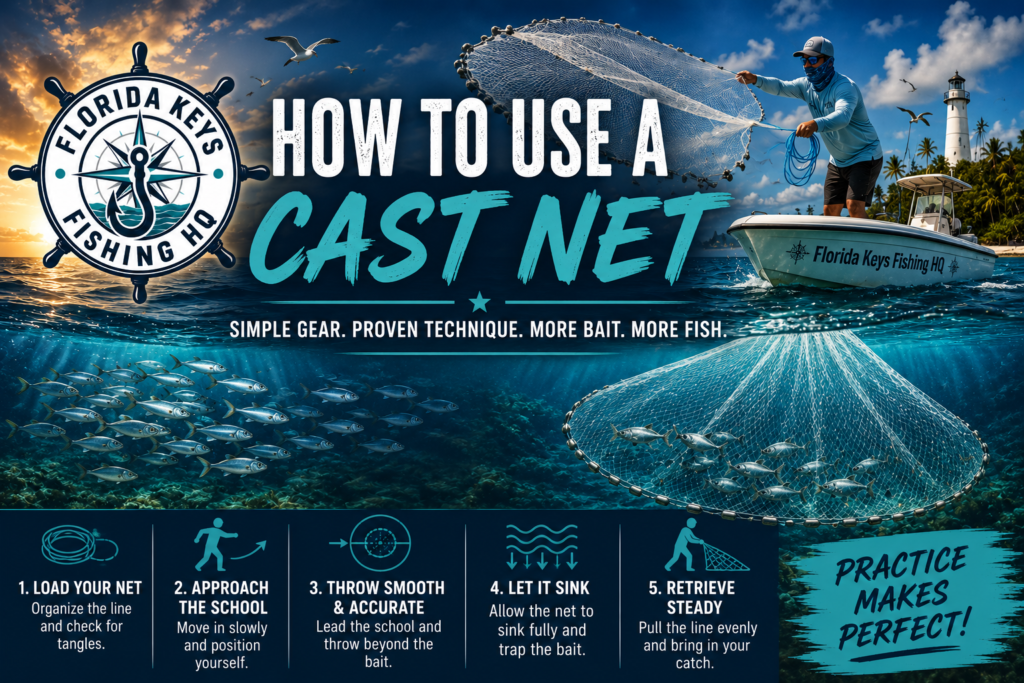
A cast net is the fastest way to fill a live well.
Tips:
- Approach schools slowly.
- Watch for nervous water.
- Lead the school slightly.
- Throw beyond the bait and let the net sink.
- Retrieve smoothly.
Practice makes a huge difference when throwing a cast net.
Using Electronics to Find Bait
Modern sonar can quickly reveal large bait schools.
Look for:
- Dense bait balls
- Clouds suspended off the bottom
- Fish stacked around structure
- Birds diving over active schools
Many anglers use side imaging to locate bait before making a cast.
Keeping Live Bait Alive
Healthy bait catches more fish.
Tips:
- Keep plenty of fresh water flowing through the live well.
- Avoid overcrowding.
- Handle bait as little as possible.
- Remove dead bait immediately.
- Match water temperature whenever possible.
A lively baitfish will always outperform a weak one.
Best Time to Catch Live Bait
The best times are:
- Early morning
- Around sunrise
- Before boat traffic increases
- On moving tides
Many bait schools disperse once the sun gets high and boat traffic picks up.
Final Thoughts
Learning how to catch your own live bait is one of the biggest advantages an angler can have in the Florida Keys. Fresh bait often makes the difference between a slow day and an unforgettable one.
By learning where different bait species live, using the right equipment, and taking good care of your bait, you’ll greatly improve your success whether you’re reef fishing, offshore fishing, deep dropping, or targeting pelagic species.
Leave a Reply