Blog

  • Introduction

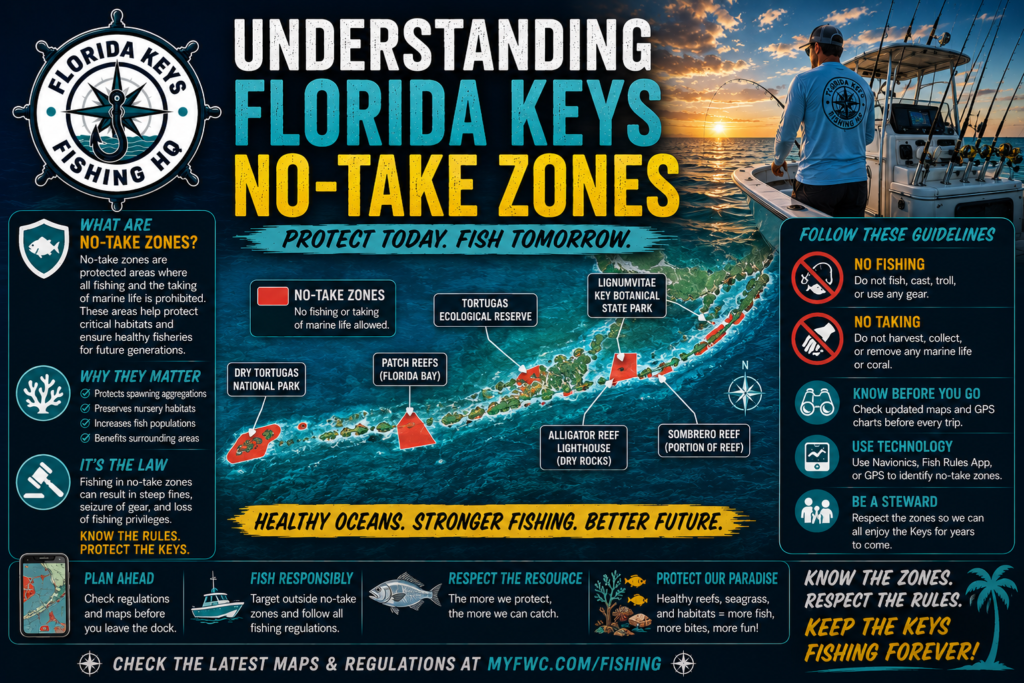
    No-take zones are among the most misunderstood areas in the Florida Keys.

    Many anglers and spearfishermen know they exist, but are unsure where they are located, what activities are prohibited, and how to identify them before entering the water.

    Understanding no-take zones is essential for protecting marine resources and avoiding costly violations.

    What Is a No-Take Zone?

    A no-take zone is an area where harvesting marine life is prohibited.

    Depending on the specific designation, restrictions may apply to:

    • Fishing
    • Spearfishing
    • Lobstering
    • Collecting marine life
    • Harvesting coral or other protected resources

    The purpose of these zones is to protect sensitive habitats and fish populations.

    Why Do No-Take Zones Exist?

    The Florida Keys contain some of the most unique marine ecosystems in the United States.

    No-take zones help:

    • Protect coral reefs
    • Preserve fish spawning areas
    • Support healthy fish populations
    • Improve long-term fishing opportunities

    These protected areas benefit both recreational anglers and future generations.

    Common Mistakes Anglers Make

    Many violations occur because boaters:

    • Do not verify boundaries before fishing
    • Rely on outdated information
    • Assume nearby waters are legal
    • Fail to review current regulations

    A few minutes of research before leaving the dock can prevent major problems.

    How To Identify No-Take Zones

    Before every trip, review:

    • Official sanctuary maps
    • Current regulations
    • GPS chartplotter information
    • Navigation apps such as Navionics

    Boundaries can change, so always verify current information.

    Frequently Asked Questions

    Can I fish inside a no-take zone?

    No. Harvesting marine life is prohibited.

    Can I spearfish inside a no-take zone?

    No. Spearfishing is prohibited.

    Can I anchor inside a no-take zone?

    Rules vary depending on the specific area. Always review current regulations.

    How do I know if I am inside a no-take zone?

    Use current maps, GPS equipment, and official resources before fishing or diving.

    Final Thoughts

    The Florida Keys provide incredible fishing and diving opportunities, but anglers and divers must understand protected areas before entering the water.

    Taking time to learn no-take zone boundaries will help protect marine resources and ensure your trip remains safe and legal.
  • Introduction

    One of the most common questions visitors ask before a Florida Keys spearfishing trip is simple:

    “Where can I legally spearfish?”

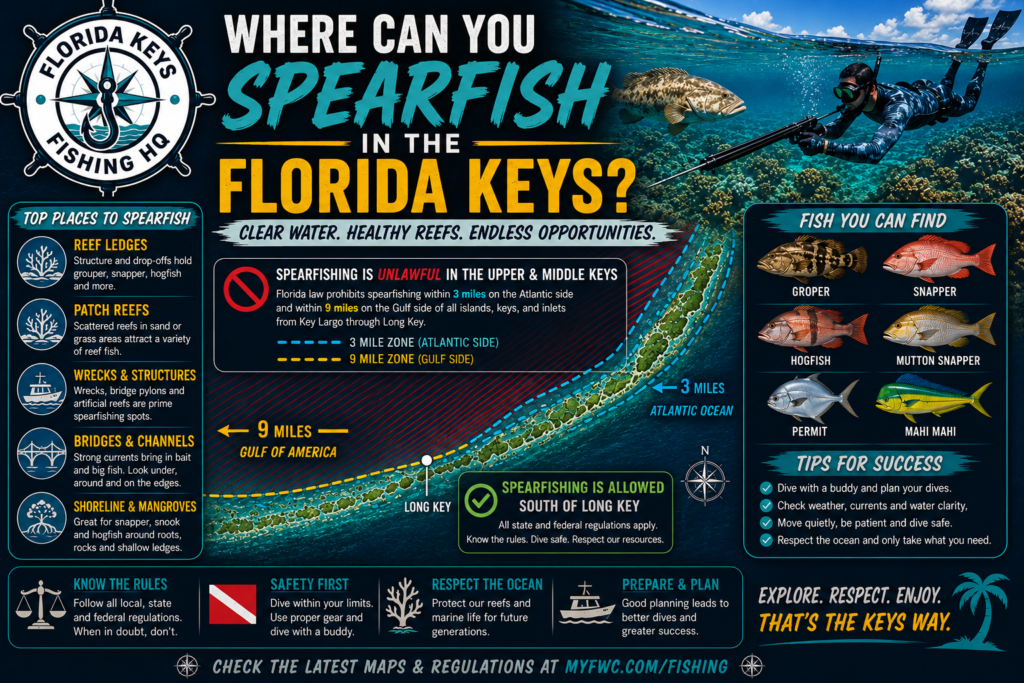
    In the Upper and Middle Keys, from Key Largo south through Long Key, spearfishing is generally prohibited within 3 miles of shore on the Atlantic Ocean side and within 9 miles of shore on the Gulf of America side. These restrictions include many islands, keys, and inlets throughout the region.

    Spearfishing opportunities become much more available south of Long Key, where many offshore reefs, ledges, and patch reefs are open to spearfishing, provided they are not located within a no-take zone, sanctuary preservation area, wildlife management area, or other protected zone.

    Before every trip, anglers and divers should verify current regulations using official NOAA Sanctuary maps and Florida Fish and Wildlife Conservation Commission (FWC) resources, as additional closures and protected areas may apply.

    When in doubt, check the regulations first. A few minutes of research can prevent costly violations and help protect the Florida Keys fishery for future generations.

    The Florida Keys contain numerous protected areas, sanctuary preservation areas, ecological reserves, state parks, and no-take zones.

    Additional Spearfishing Restrictions

    Even in areas where spearfishing is generally legal, several additional restrictions apply throughout Florida and the Florida Keys.

    Beaches, Piers, and Bridges

    Spearfishing is prohibited:

    • Within 100 yards of a public swimming beach.
    • Within 100 yards of any commercial or public fishing pier.
    • Within 100 yards of any portion of a bridge where public fishing is allowed.

    Jetties

    Spearfishing is prohibited within 100 feet of any part of a jetty that extends above the surface of the water.

    An exception exists for the last 500 yards of a jetty that extends more than 1,500 yards from shore, where spearfishing may be allowed if all other regulations are followed.

    Understanding where you can and cannot spearfish is essential before entering the water.

    Why So Many People Get Confused

    Many anglers assume that if they are offshore, they can legally spearfish.

    However, certain areas throughout the Florida Keys prohibit spearfishing regardless of distance from shore.

    Protected areas may include:

    • Sanctuary Preservation Areas
    • Ecological Reserves
    • State Parks
    • Research Areas
    • Existing No-Take Zones

    Always verify current regulations before entering the water.

    Areas to Research Before Every Trip

    Before launching your boat, confirm:

    • Current sanctuary boundaries
    • No-take zones
    • State park restrictions
    • Seasonal closures
    • Species regulations

    Taking a few minutes to verify boundaries can prevent costly mistakes.

    Tools That Help

    Several tools can help identify boundaries and protected areas:

    • Official sanctuary maps
    • GPS chartplotters
    • Navionics
    • State and federal agency websites

    Never rely solely on memory when planning a trip.

    Common Questions

    Can I spearfish near mangrove islands?

    It depends on the specific location and whether the area falls within a protected zone.

    Can I spearfish near bridges?

    Certain bridges and nearby waters may have restrictions. Always verify local regulations.

    Can I spearfish in state parks?

    Many state parks prohibit spearfishing.

    Can I spearfish inside no-take zones?

    No. Harvesting marine life is prohibited in no-take zones.

    Final Thoughts

    The Florida Keys offer outstanding spearfishing opportunities, but understanding legal boundaries is critical.

    Before every trip, verify current regulations and protected areas to ensure a safe and legal dive.