Florida Keys Artificial Reef Guide (2026 Edition)
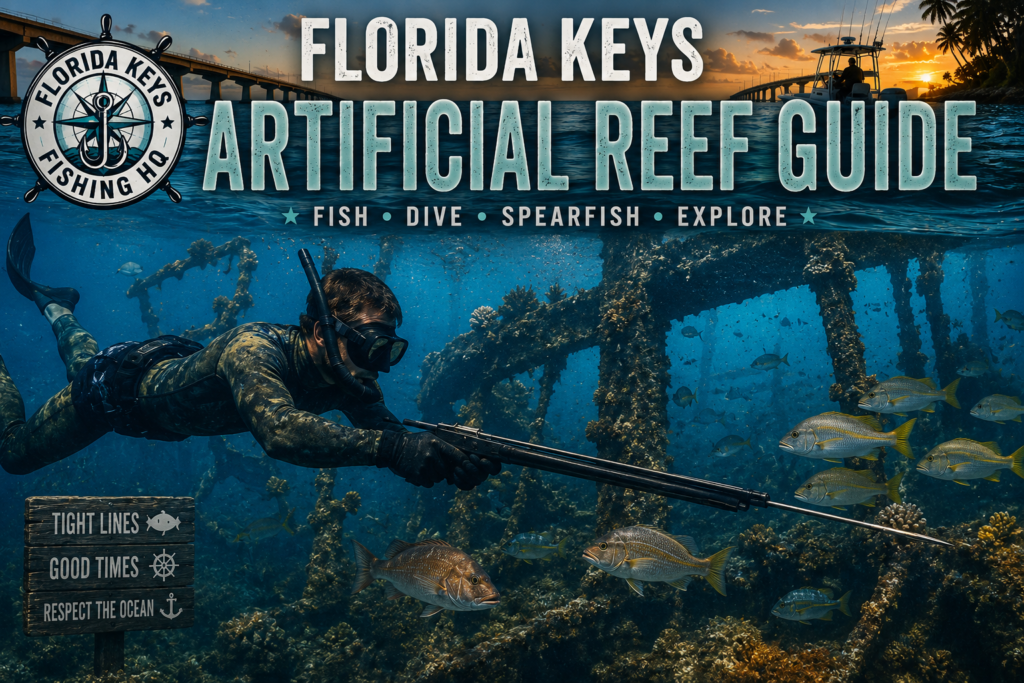
The Florida Keys are home to some of the most productive artificial reefs in the world. These intentionally placed wrecks and structures attract baitfish, snapper, grouper, pelagic species, and countless other marine life.
Whether you’re fishing, diving, snorkeling, or spearfishing where permitted, understanding the Florida Keys artificial reef system can dramatically improve your success on the water.
Why Artificial Reefs Are So Productive
Artificial reefs create structure where little or none previously existed.
Over time these reefs become covered with coral, sponges, algae, and other marine growth. This attracts baitfish, which in turn attract larger predators such as:
- Mangrove Snapper
- Yellowtail Snapper
- Mutton Snapper
- Black Grouper
- Gag Grouper
- Cobia
- Amberjack
- Kingfish
- Barracuda
- Permit
The larger the structure, the larger the ecosystem it can support.
Spiegel Grove
The Spiegel Grove is one of the most famous artificial reefs in the world.
Location
Key Largo
Length
Approximately 510 feet
Depth
65 to 130 feet
Species Found
- Black Grouper
- Mutton Snapper
- Mangrove Snapper
- Amberjack
- Cobia
- Barracuda
The massive size of the Spiegel Grove makes it one of the best places in the Florida Keys to locate structure-oriented species.
USS Duane
The Duane is another legendary Key Largo wreck.
Depth
Approximately 120 feet
Species Found
- Mutton Snapper
- Black Grouper
- Amberjack
- Permit
- Barracuda
Strong currents frequently push bait across the wreck, creating excellent fishing opportunities.
Eagle Wreck
The Eagle Wreck is a favorite among divers and fishermen alike.
Depth
Approximately 110 feet
Species Found
- Mangrove Snapper
- Yellowtail Snapper
- Grouper
- Permit
- Cobia
The Eagle often holds large schools of baitfish and can be extremely productive during seasonal migrations.
Thunderbolt Wreck
Located in the Middle Keys, the Thunderbolt is one of the most popular wrecks in Marathon.
Depth
Approximately 120 feet
Species Found
- Grouper
- Snapper
- Amberjack
- Cobia
The wreck sits upright and creates substantial relief from the surrounding seafloor.
Adolphus Busch Senior
Located offshore of Islamorada.
Depth
Approximately 110 feet
Species Found
- Mangrove Snapper
- Mutton Snapper
- Grouper
- Amberjack
This wreck frequently produces quality fish throughout the year.
What To Look For Around Artificial Reefs
The reef itself is not always where the fish are holding.
Look for:
- Current edges
- Bait schools
- Down-current structure
- Sand-to-rock transitions
- Nearby ledges
- Bottom relief
Many of the largest fish hold just off the wreck rather than directly on top of it.
Fishing Artificial Reefs
Artificial reefs can be productive using:
Bottom Fishing
- Live pinfish
- Ballyhoo
- Pilchards
- Squid
Vertical Jigging
- Butterfly jigs
- Speed jigs
- Knife jigs
Live Baiting
- Blue runners
- Pilchards
- Goggle eyes
Safety Considerations
Always monitor:
- Current strength
- Boat traffic
- Weather conditions
- Fishing regulations
- Protected zones
Some artificial reefs are located in heavily trafficked areas and require careful boat positioning.
Related Florida Keys Fishing Guides
- Artificial Reefs in the Florida Keys
- Best Florida Keys Fishing Spots by Species
- Best Florida Keys Spearfishing Areas
Final Thoughts
Florida Keys artificial reefs provide some of the best fishing opportunities in the state. From the Spiegel Grove in Key Largo to the Thunderbolt in Marathon, these structures attract baitfish and predators year-round.
If you’re looking for consistent action, artificial reefs should be a regular part of your Florida Keys fishing strategy.
Related Articles
- Mangrove Snapper Fishing Guide (2026 Florida Keys Edition)
- Yellowtail Snapper Fishing in the Florida Keys (2026 Guide)
- Mutton Snapper Fishing in the Florida Keys (2026 Guide)
- Black Grouper Fishing in the Florida Keys (2026 Guide)
- Florida Keys Fishing Calendar (2026 Guide)
- Best Florida Keys Spearfishing Areas (2026 Guide)
- Florida Keys Spearfishing Regulations Explained (2026 Guide)