How to Use Navionics to Find Deep Drop Fishing Spots (2026 Guide)
Introduction
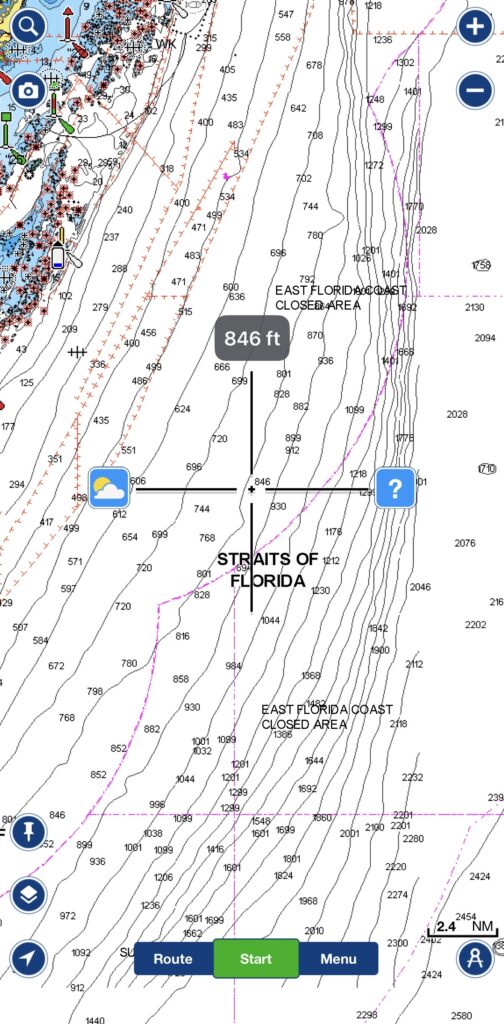
Finding productive deep drop fishing spots can be one of the biggest challenges for offshore anglers. Fortunately, tools like Navionics make it possible to identify underwater structure, ledges, drop-offs, and contour changes that often hold fish. For more detail on interpreting the chart itself, see how to read Navionics for deep drop fishing, then compare those features with the best deep drop fishing spots in the Florida Keys.
Learning how to read contour lines properly can dramatically improve your success when targeting species such as snowy grouper, tilefish, and other deep-water fish.
Why Contour Lines Matter
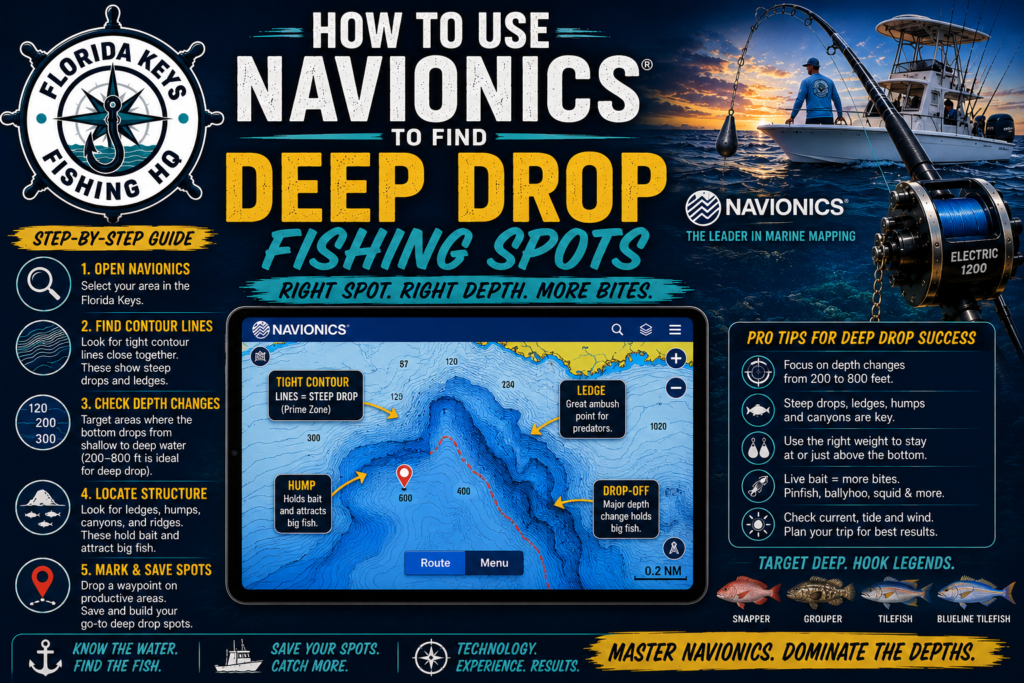
Contour lines represent changes in water depth. The closer the lines are together, the steeper the bottom structure.
Deep-water species often relate to:
- Ledges
- Drop-offs
- Hard bottom
- Underwater ridges
- Sharp depth changes
These areas provide feeding opportunities and concentrate baitfish.
What To Look For
When searching Navionics charts, focus on:
- Tight contour lines
- Sudden depth changes
- Underwater points
- Isolated structure
- Bottom features surrounded by deeper water
These locations often produce better results than large flat areas.
Finding Snowy Grouper Spots
When targeting snowy grouper, many anglers focus on steep contour changes and ledges in deep water.
Look for:
- Significant depth breaks
- Sharp drop-offs
- Structure adjacent to deep water
- Areas where contour lines bunch together
These features frequently attract bait and predator species.
Marking Waypoints
Whenever you catch fish, immediately save a waypoint.
Over time, a collection of productive waypoints can become one of the most valuable tools in your fishing arsenal.
Many successful anglers build their own private library of productive locations over several seasons.
Common Mistakes
Many anglers:
- Fish flat bottom
- Ignore contour changes
- Drift too quickly
- Fail to save productive waypoints
- Overlook isolated structure
Paying attention to chart details can dramatically improve results.
Related Navionics & Deep Drop Guides
- How to Read Navionics for Deep Drop Fishing
- Deep Drop Fishing in the Florida Keys
- Best Fish Finders for Florida Keys Fishing
Getting ready to fish the Florida Keys? Check our Florida Keys fishing tackle checklist to make sure your essential gear is ready before leaving the dock.
For line, leaders, hooks and other rigging essentials, see our Florida Keys fishing line, leaders and terminal tackle guide.
Planning your next Florida Keys fishing trip? Check our Florida Keys fishing calendar for a month-by-month look at fishing opportunities.
Final Thoughts
Navionics is one of the most valuable tools available to offshore anglers. Learning to identify productive structure, contour changes, and deep-water features can help you consistently locate fish and spend more time fishing productive areas.